Under Armour product customization engine

Put literally anything on a shoe*

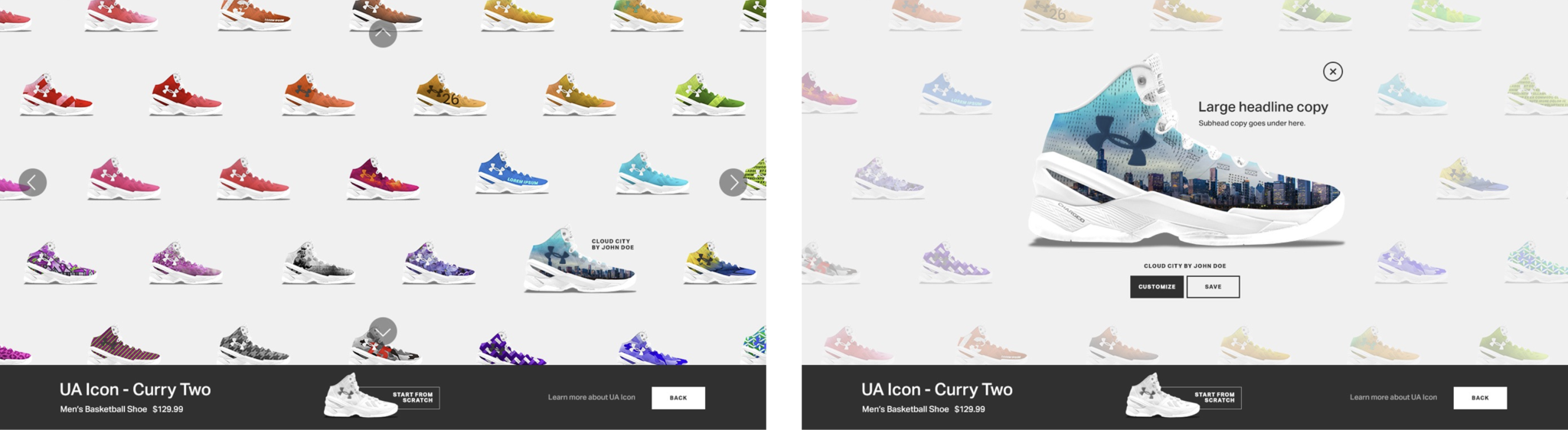
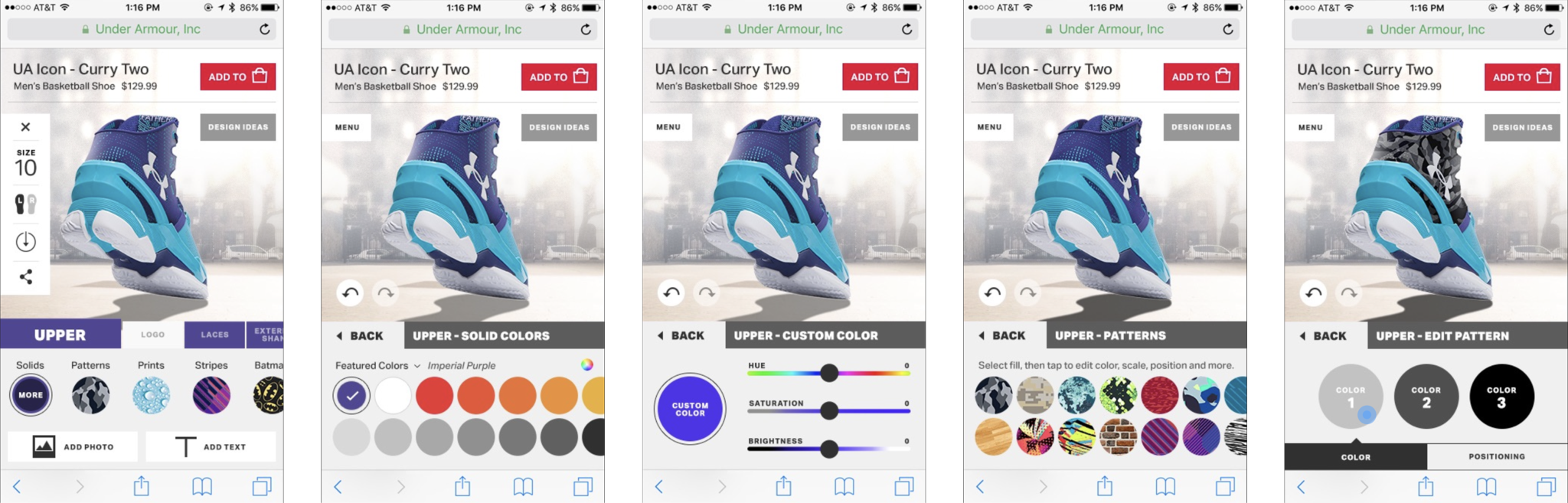
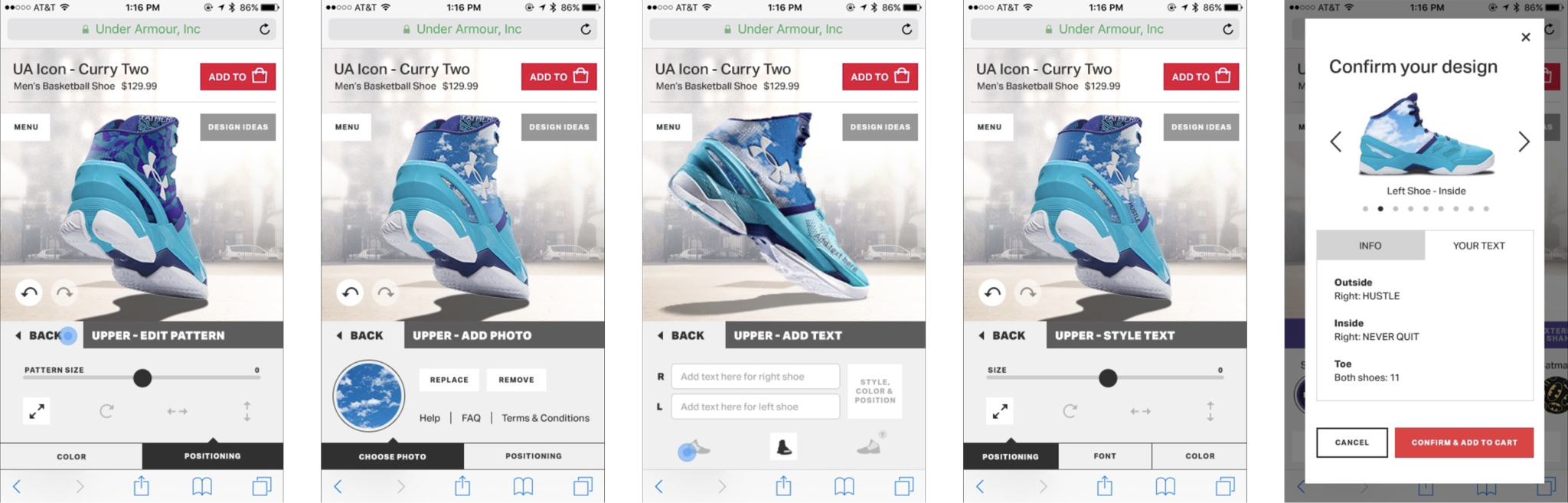
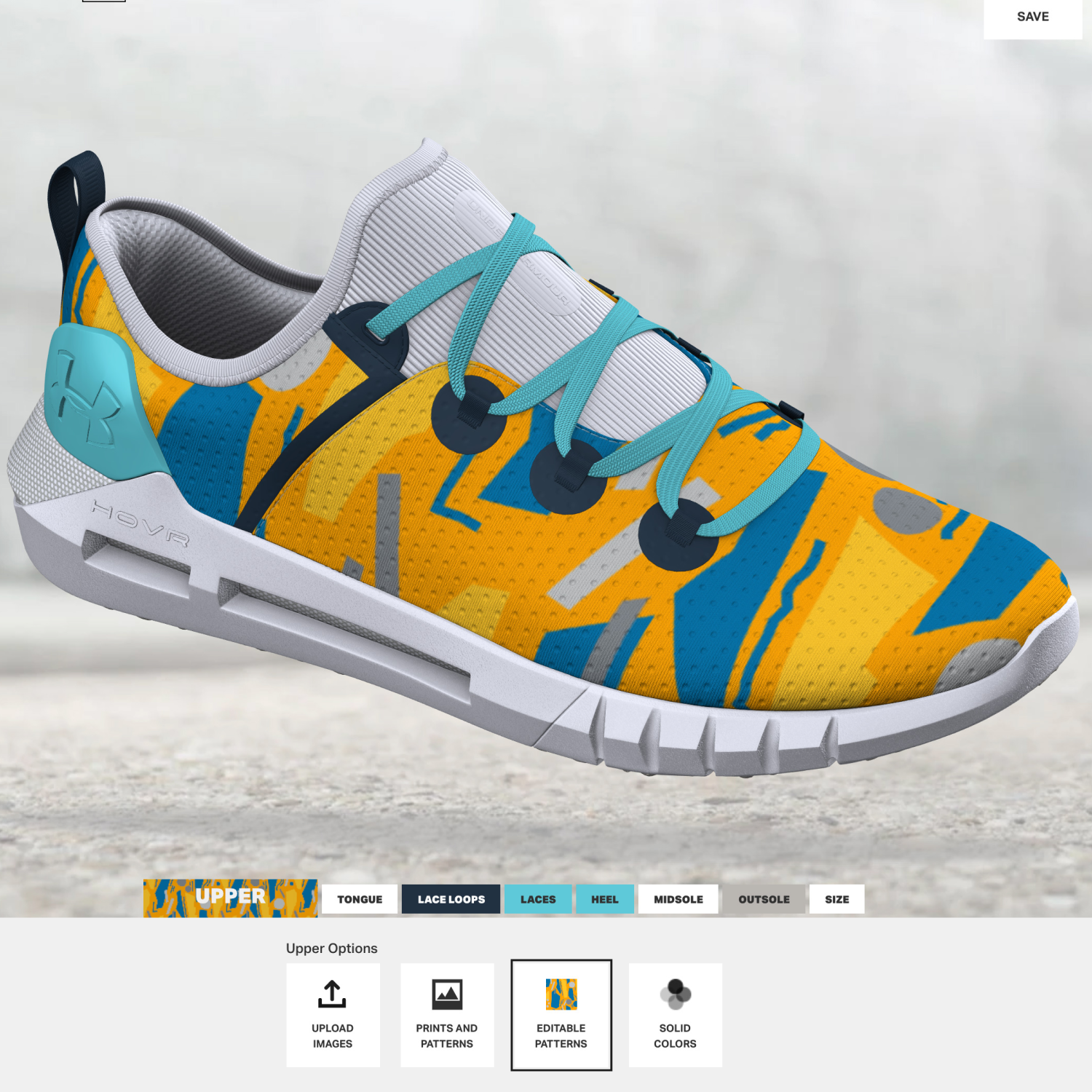
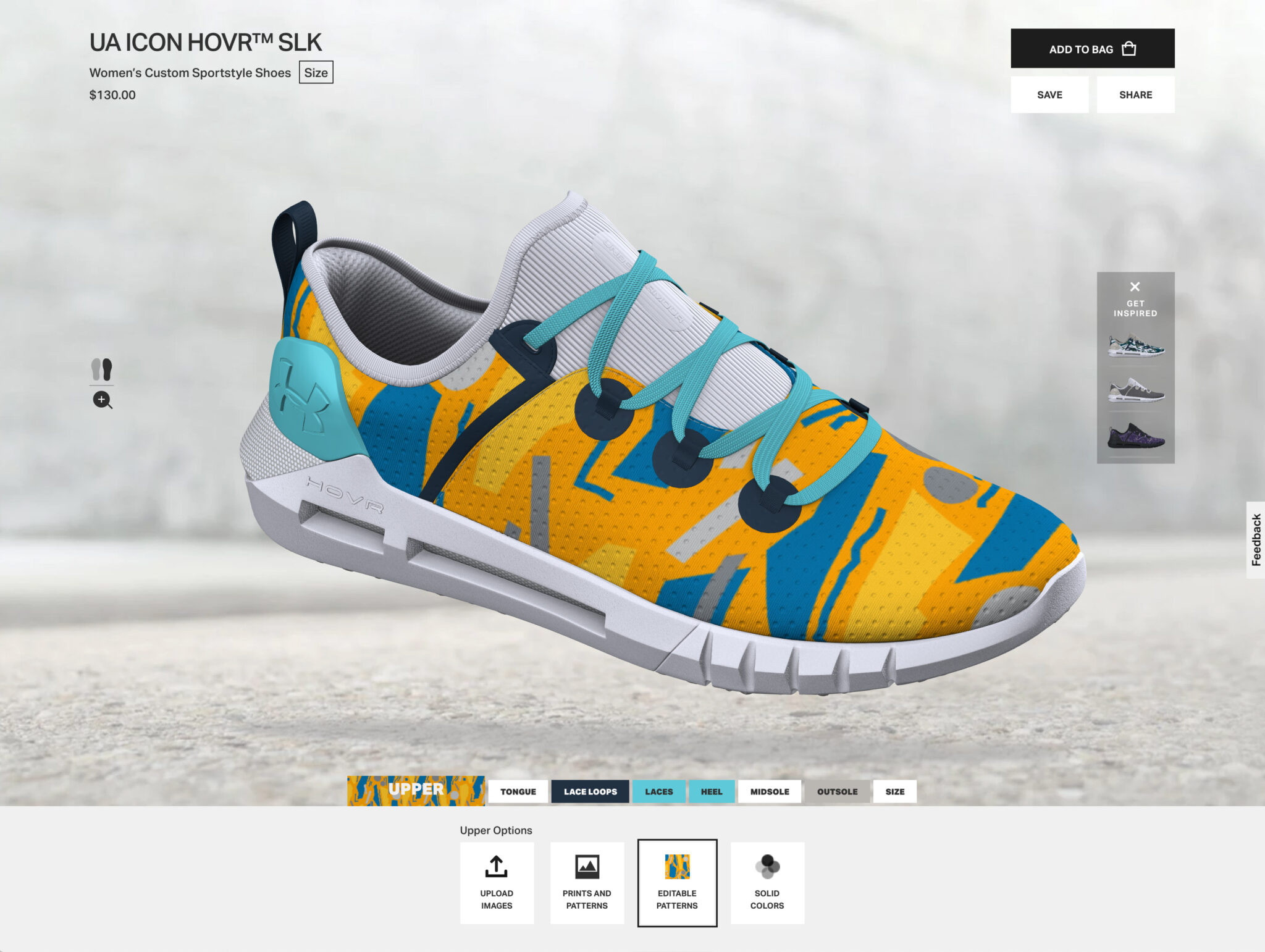
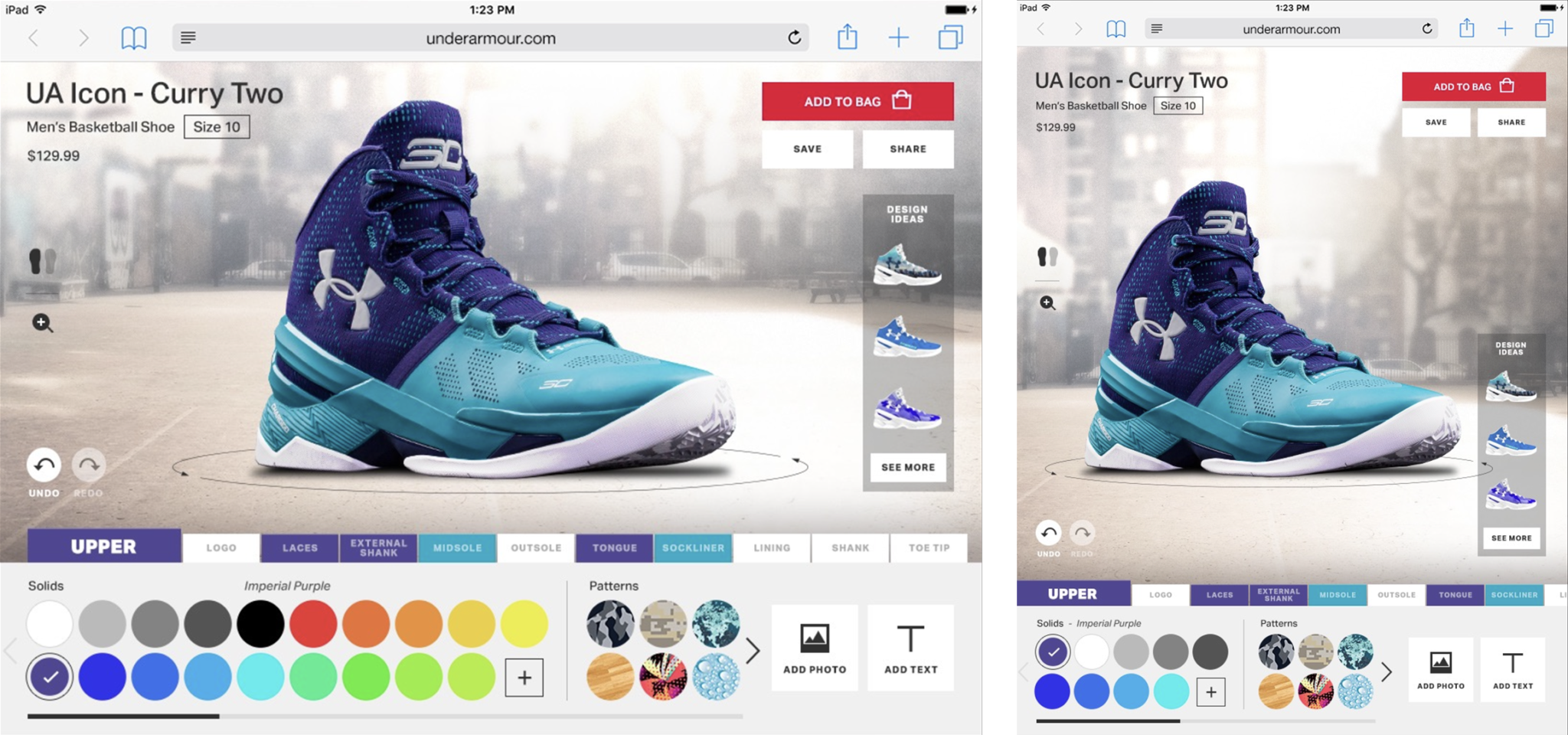
The Under Armour Icon web app let users customize dozens of shoe parts, and add color, patterns, type, and even photos to shoe uppers. We had to understand the opportunities and limitations of WebGL and understand the manufacturing process so that our tools would produce reliable renderings and accurate outputs leading to satisfied customers. We also had to balance between mobile compatibility and supporting repeat expert usage on desktop – we wanted creators to use it as a platform and share designs. In my role as lead UX, I contributed research, design, creative direction, and product functional specification. I was the lead interface with the enormous client team and engineering contractor.
* Of course there was a blocked words list which included other sneaker brands
Ollie ecommerce workflow

Eating your own dog food

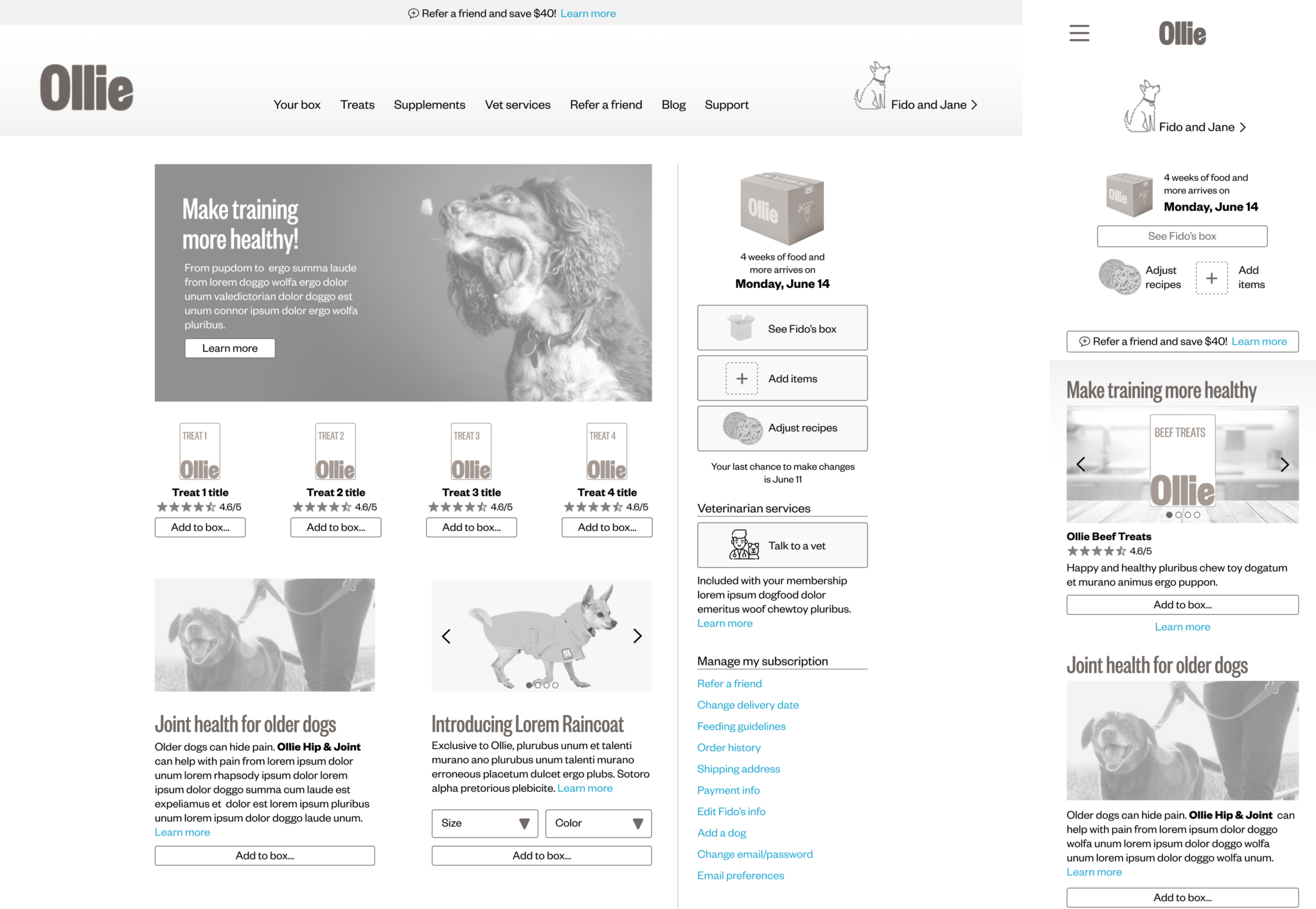
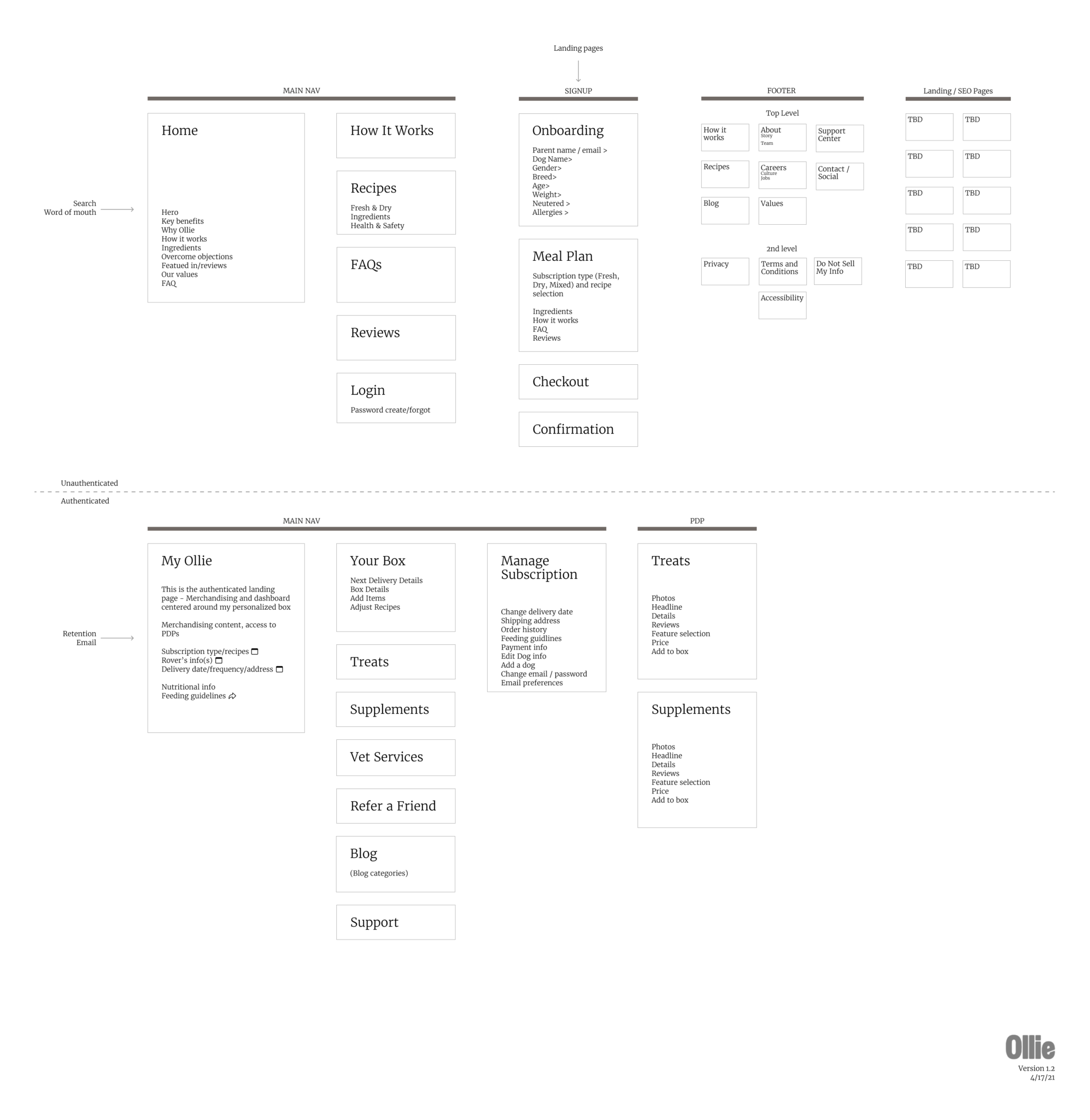
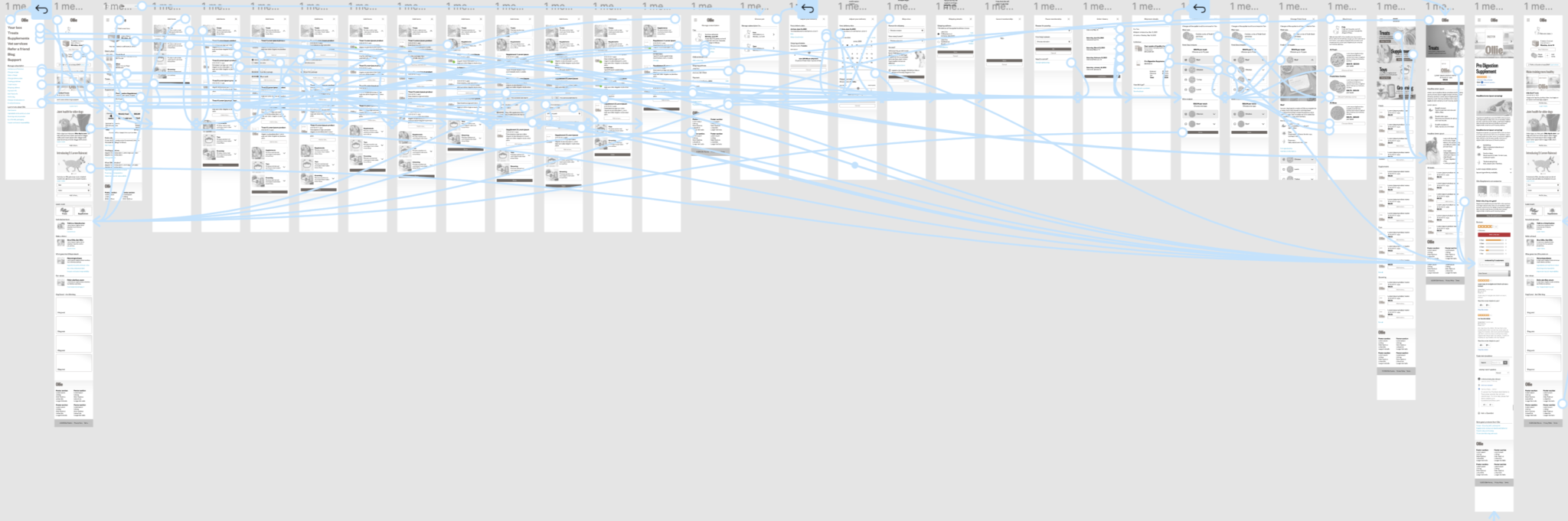
I can’t resist a challenge so when the Ollie CEO told me he had tried their “human grade” dog food himself, I knew I too would have to “dogfood” the product. I had to get to know the direct-to-consumer brand top to bottom anyway. It tasted fine, but needed some salt. Ollie had established a solid customer base and was looking to transform from a single product customization ecomm workflow to a rich product and service platform. They had to retain the brand attitude and ensure an easy and friendly user experience in a system with a lot of complex options and decisions. I consulted with the CEO and other company leaders to deliver a solution in a dynamic environment where the team’s ability to focus on design was severely constrained. Deliveries included an updated information architecture and a full featured figma prototype which took care to respect the existing storybook component library.

Syndio product design and data visualization

Growing an equitable pay platform

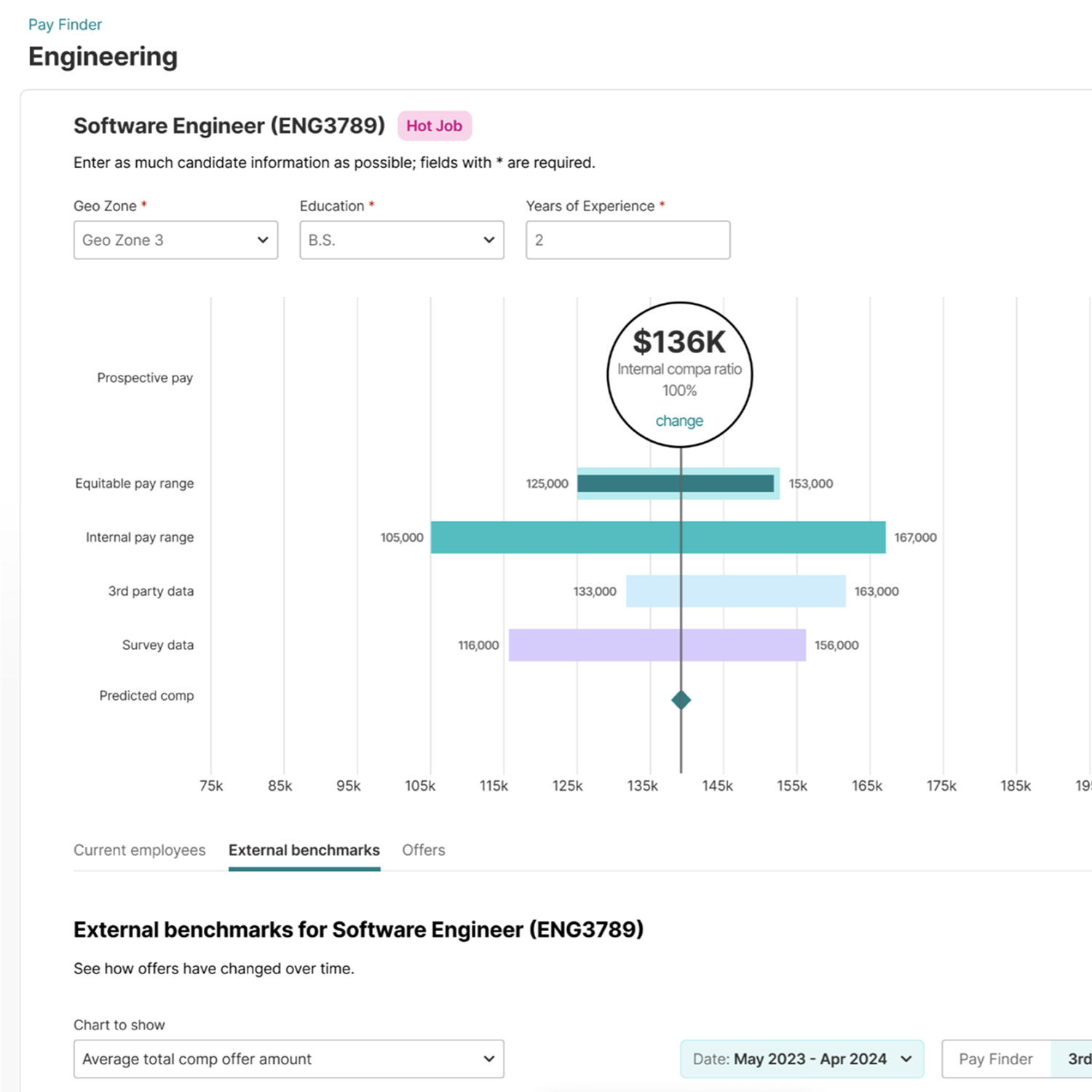
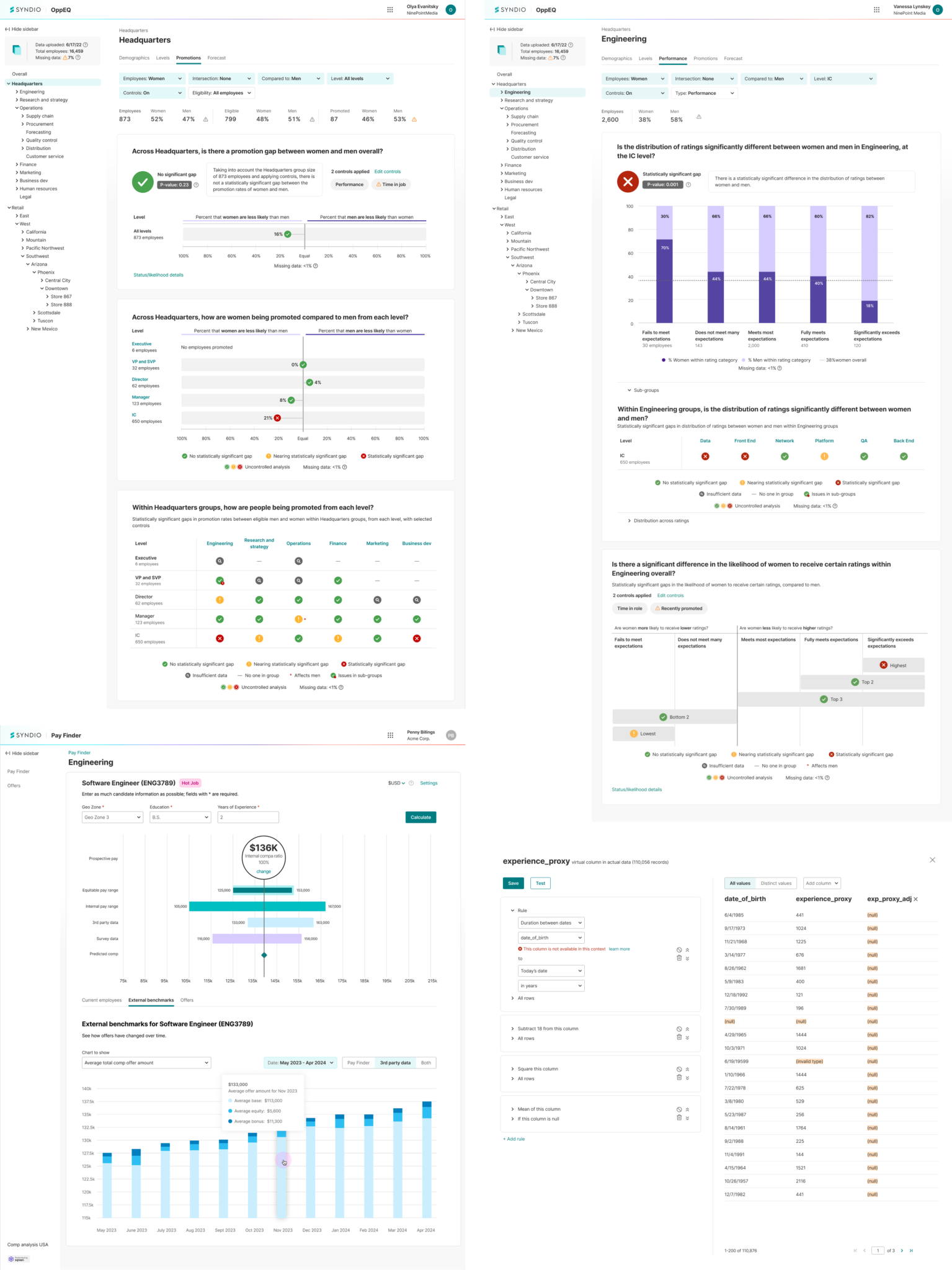
Syndio promotes fairness in the workplace by helping companies analyze and improve on equal pay, pay policy, representation, and career paths for women and underrepresented minorities. Centered on applying regression analysis to labor economics data, the products had complex UIs with profound cultural and legal implications. In addition to hands-on design, as a principal I collaborated across the entire org, advised leadership, led critical initiatives, and mentored designers and product managers. We delivered several new products, a well documented storybook design system, platform strategy, ML strategy, a support chatbot, and an ever growing set of complex, high stakes data visualizations. I also delivered extensive research on data integration, a complex data integration workflow, and a powerful data transformation UX.

Comcast strategy and ethnographic research

Listen, then help me

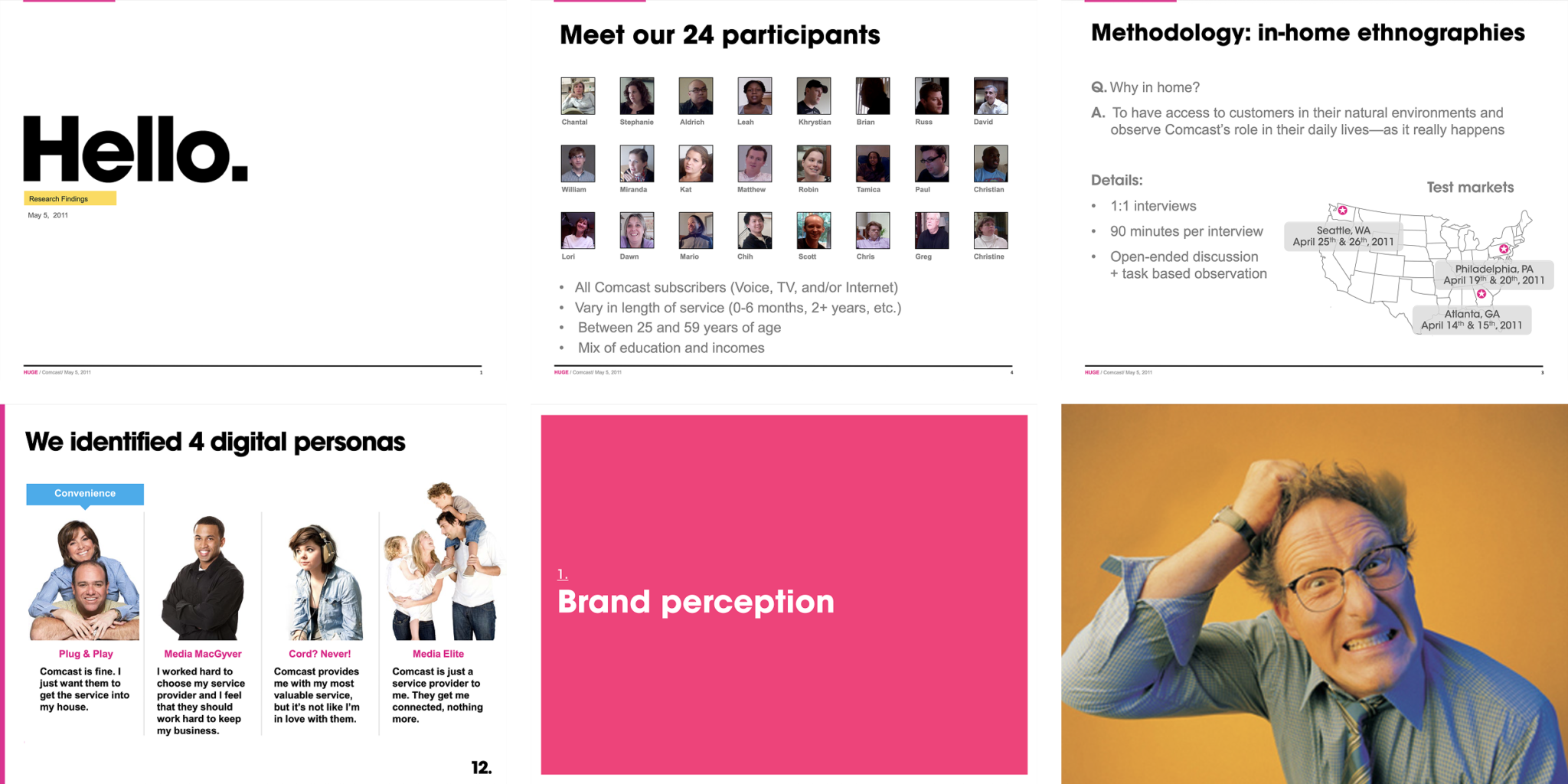
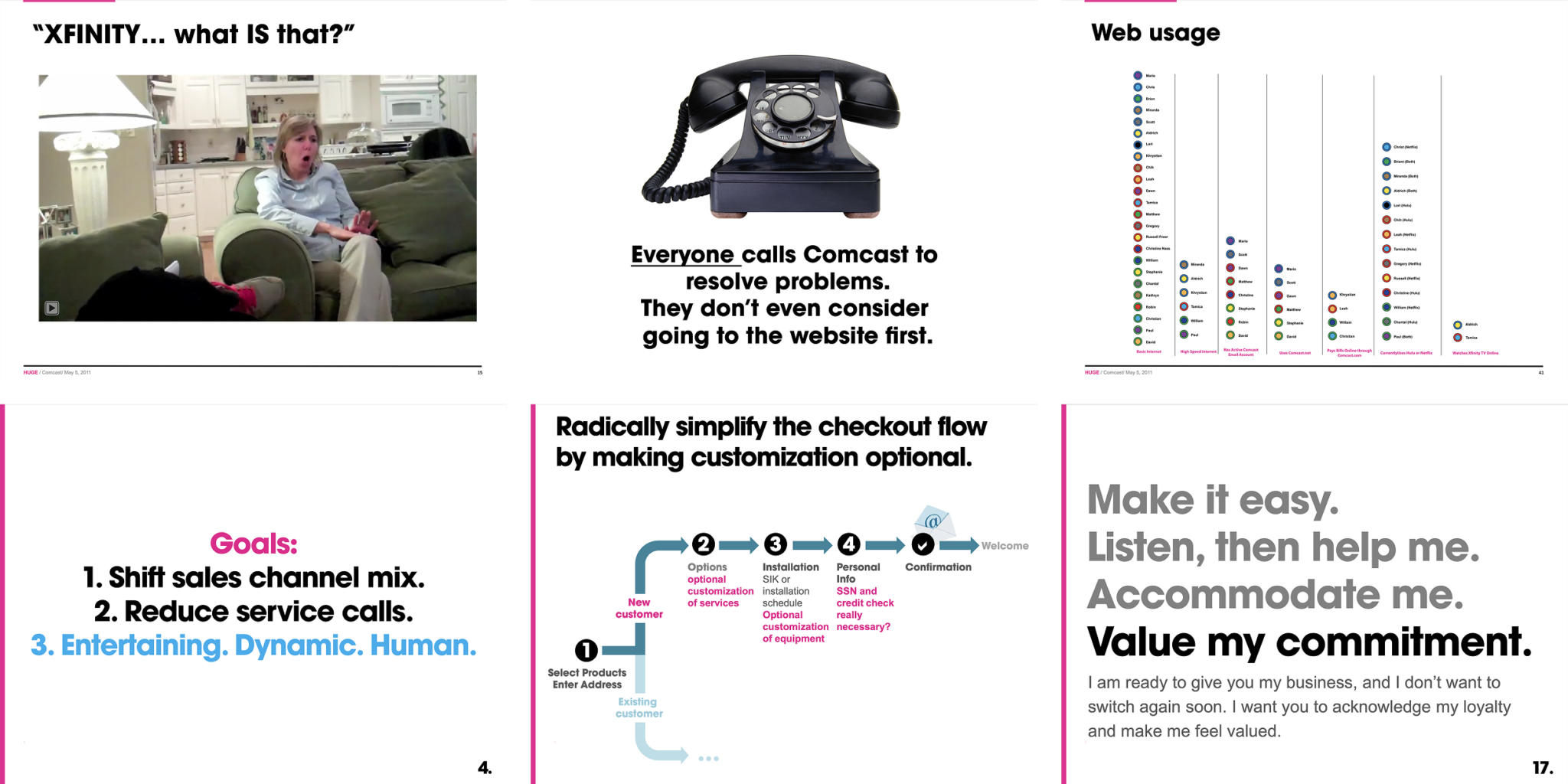
Cable companies are consistently the most reviled brands in the U.S., and Comcast was no exception, topping the charts at the time as literally THE most hated company in America. We took the opportunity of doing an extensive ethnographic research project around support (24 in-home interviews in 3 metro areas) to understand practical needs, but also how we might rehabilitate the brand from top to bottom via the digital channel. In classic HUGE fashion we delivered a punchy deck with personas, digital strategy, and our aspirational take on how to fundamentally shift the business. We never solved their abusive and misleading pricing practices, but you can’t blame a team for trying.

iHeartMedia self-service ad platform

“The radio craze … will soon fade.”

—Thomas Edison, 1922

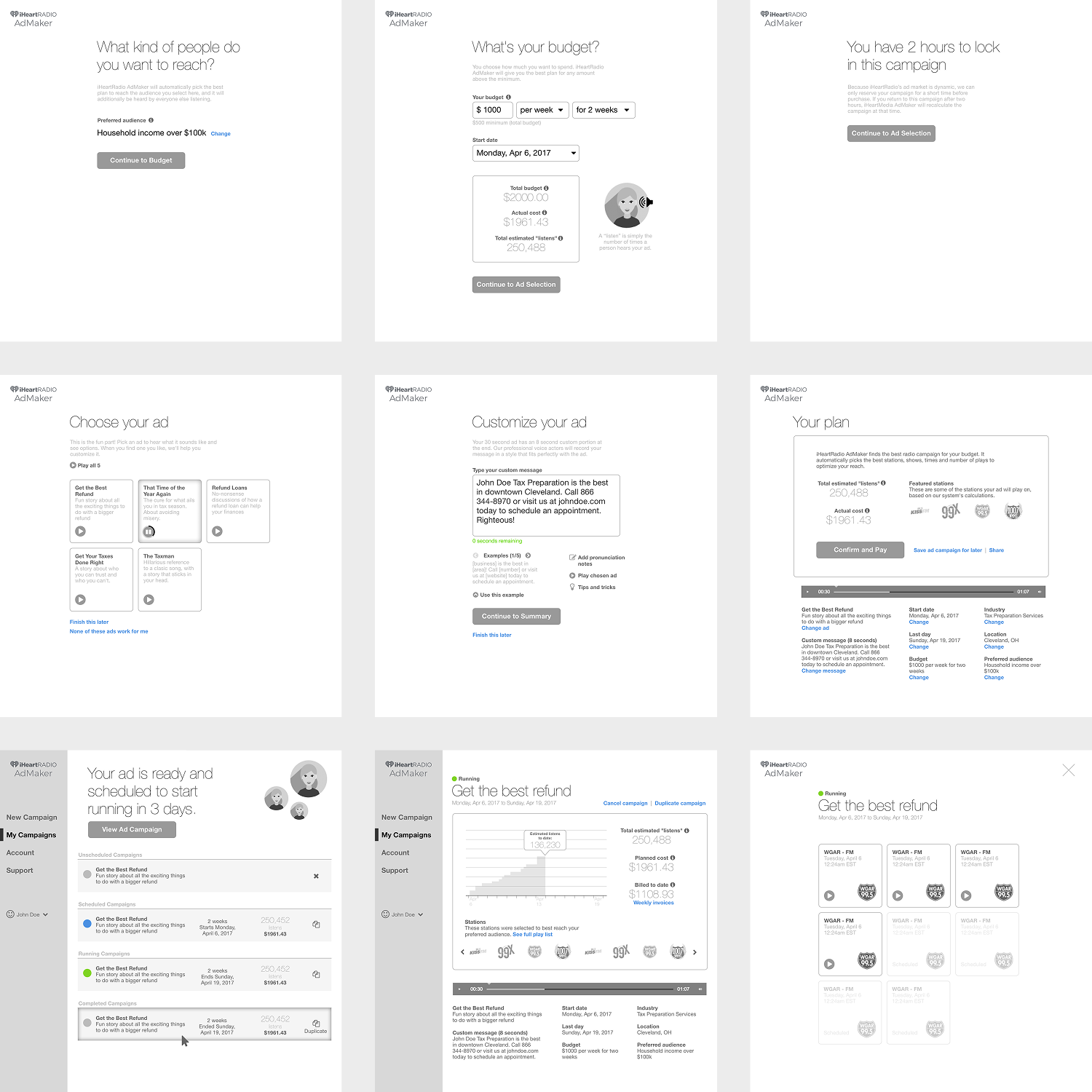
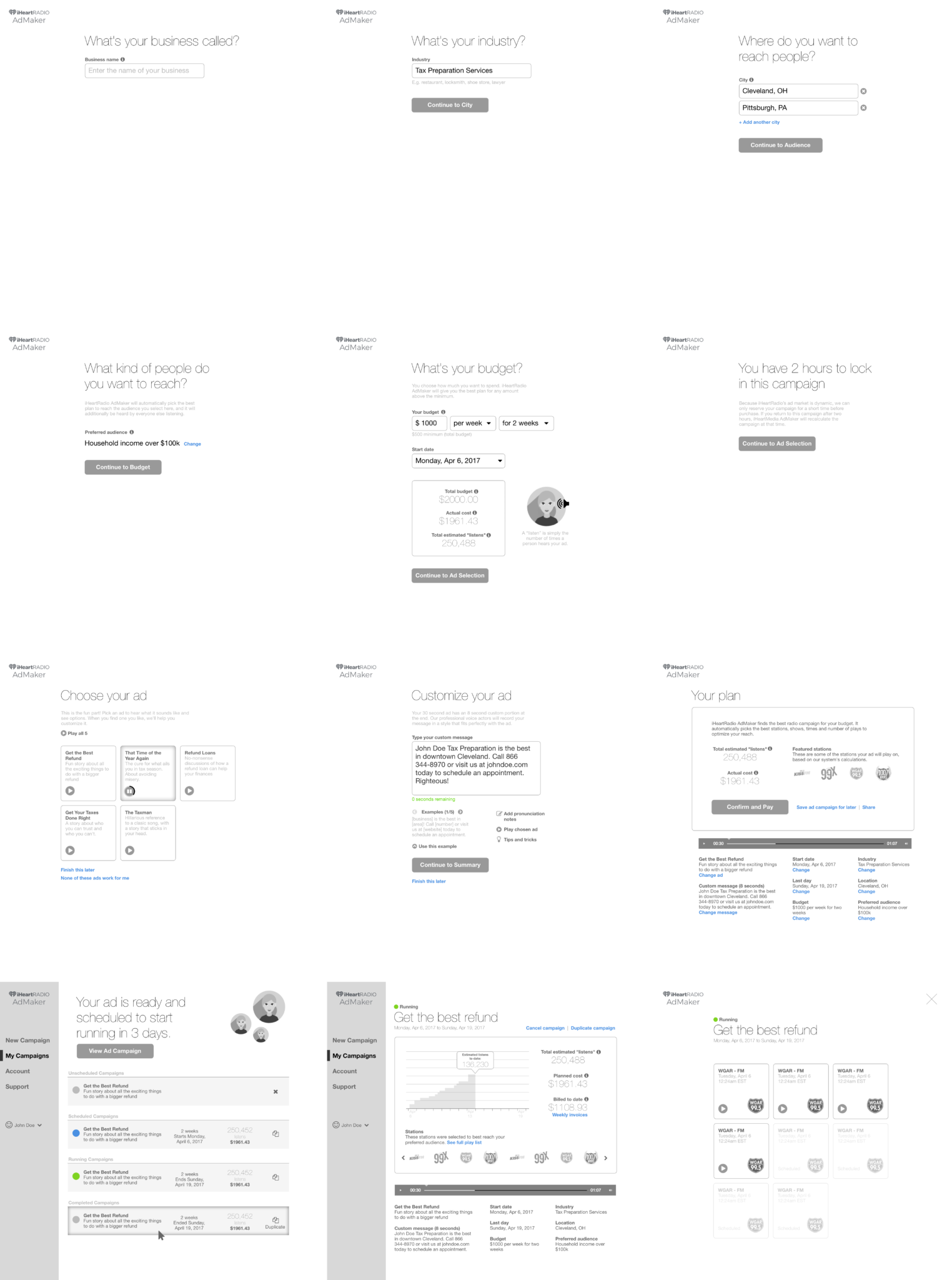
Wrong then, and still wrong today. “Terrestrial” radio remains popular even as it transitions to streaming, and audio content and advertising are only growing. IHeartMedia needed to expand targeted radio advertising to a much wider field of smaller advertisers by reducing the overhead costs and pricing for radio ads. Our small team delivered a 0-1 design and spec for a self-service audio advertising platform that would offload content creation from small businesses, simplify market selection, track and verify campaign runs, and manage budgets based on results. It had a super simple wizard UI with limited, intuitive choices on each step and help easily in reach. We consulted with senior executives to develop the concept, tested on a full prototype, and delivered final design and specs.

Commure integrated medical systems prototype

HMS and EMR drive HCPs to GTFO

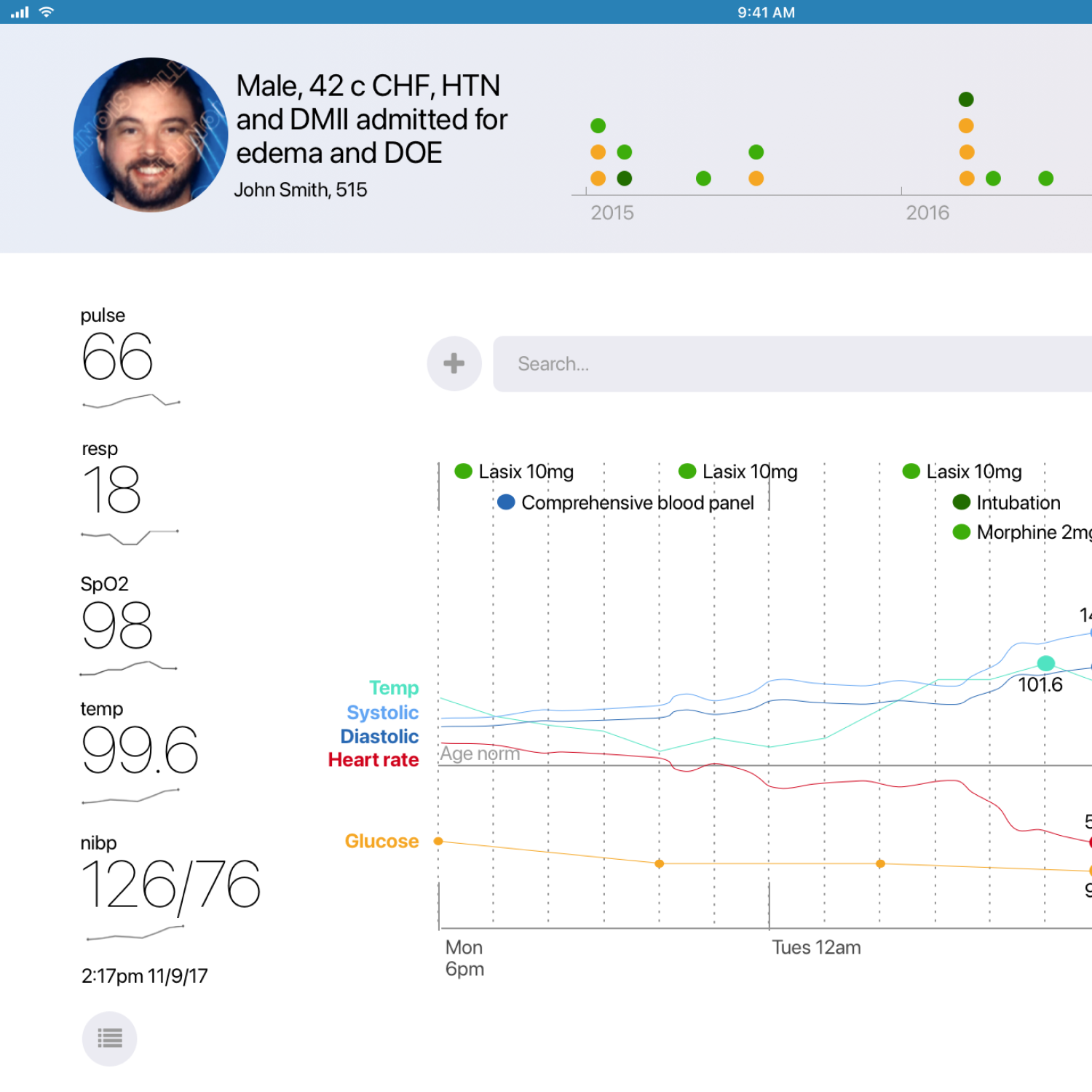
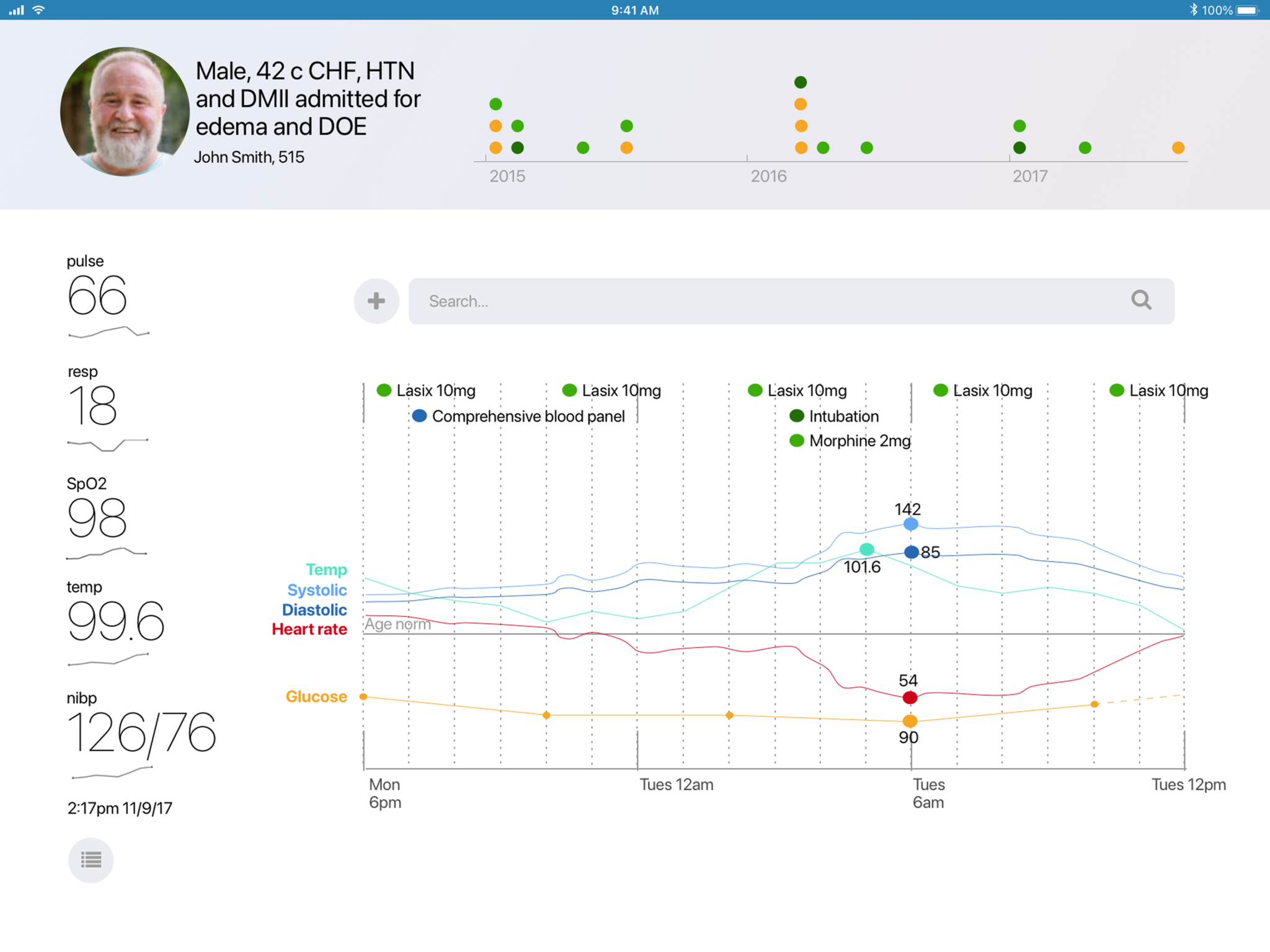
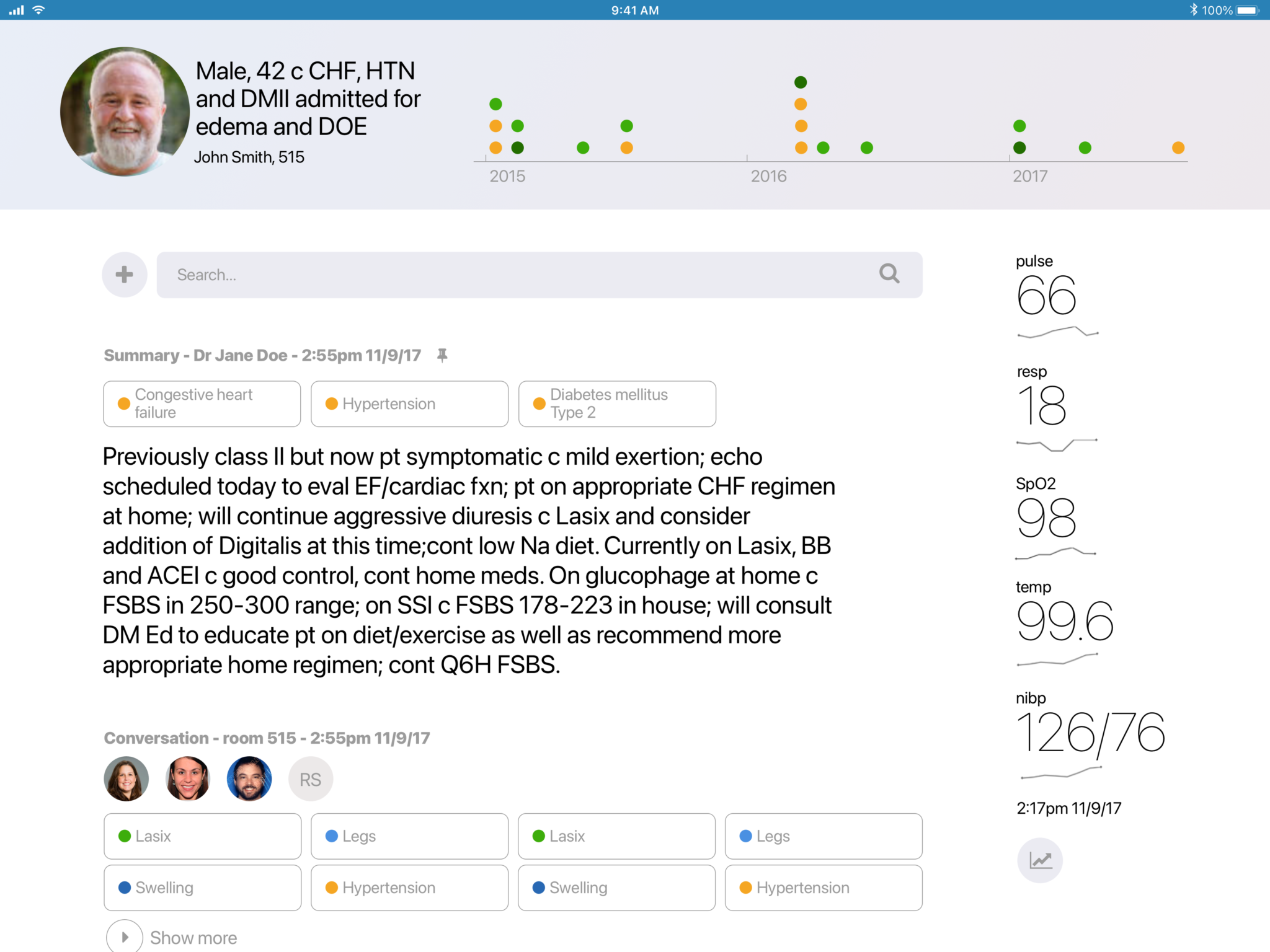
Healthcare professionals (HCPs) face an onslaught of documentation. It’s so bad, it actually causes a significant level of burnout and employee attrition. People spend all day on the computer instead of helping patients, get overloaded, and decide they can’t make it work. The root of the problem: a near total monopoly on Healthcare Management Systems and Electronic Medical Records by just two companies. With zero incentive to improve software usability, these companies have made zero investment in their UX. Commure was a (very well funded) angel stage healthcare startup with ambitions to take on and disrupt the monopoly holders (Epic and Cerner) by making software that actually works for users. My partner and I did a vision project for them covering two key areas – excessively difficult data entry, and fractured data views. We did research with eminent medical professionals and leaders including onsite ethnography at UCSF and delivered a code/design hybrid prototype. It could transcribe doctor/patient conversations and identify medically relevant tokens like conditions, medical orders, and medications and provided an integrated longitudinal visualization of patient status and medical records. We worked with the CEO and presented to the board and key investors. Commure is delivering on the promise of their initial concept – they’re valued somewhere north of $6 billion, closing a $200 million round in 2025.

Bose Channels team communication app

Giving people control of our most important human sense

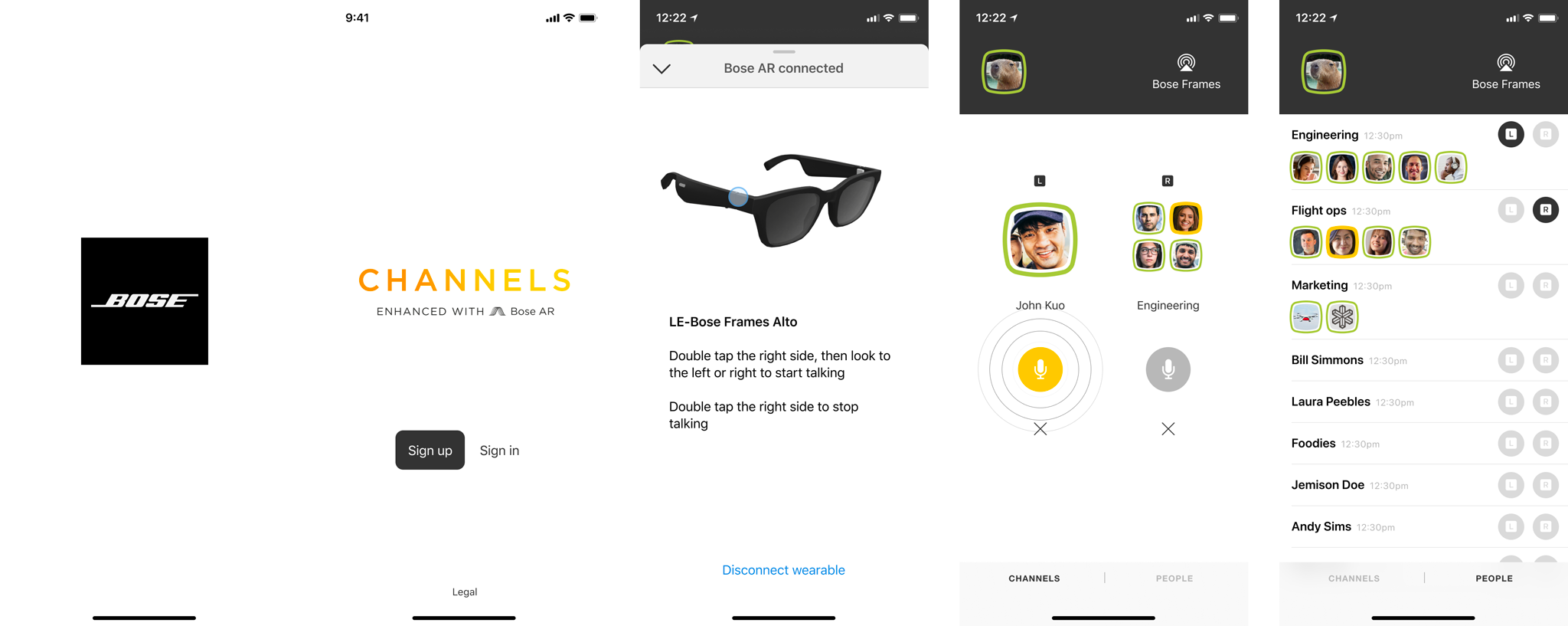
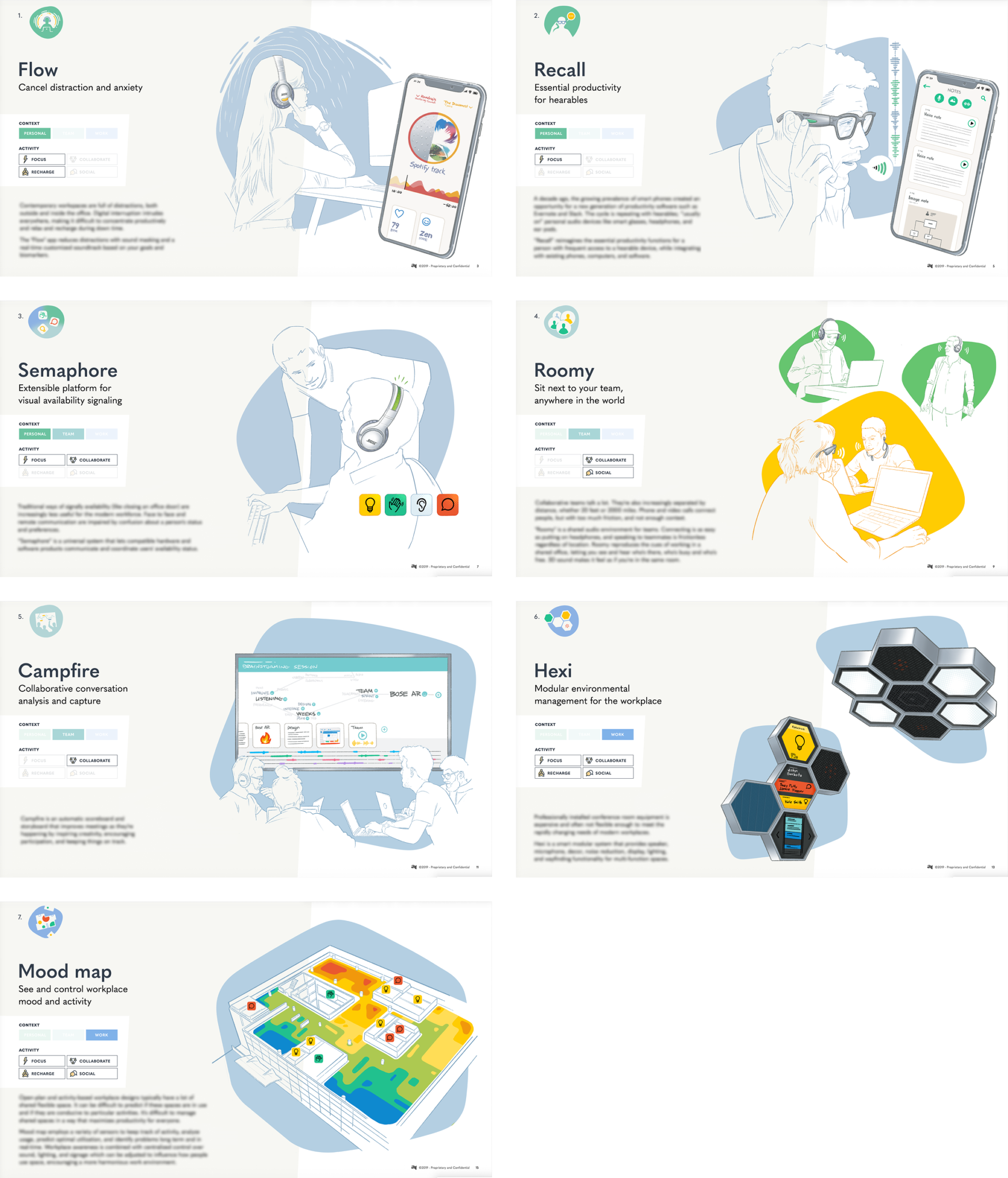
We collaborated with the legendary Dan Gauger, the pioneer of active noise cancelling at Bose in their innovation group to explore new product ideas. We fleshed out 7 hardware/software product concepts from noise cancelling rooms, to headphone traffic lights, to audio-neural stimulation. My partner and I built out a working prototype of one concept that integrated the touch controls in their headphones and glasses hardware to make team communication a double tap away (a single tap sounds better, but it’s actually too close).