Opticlose app and brand identity

Always call the right lead

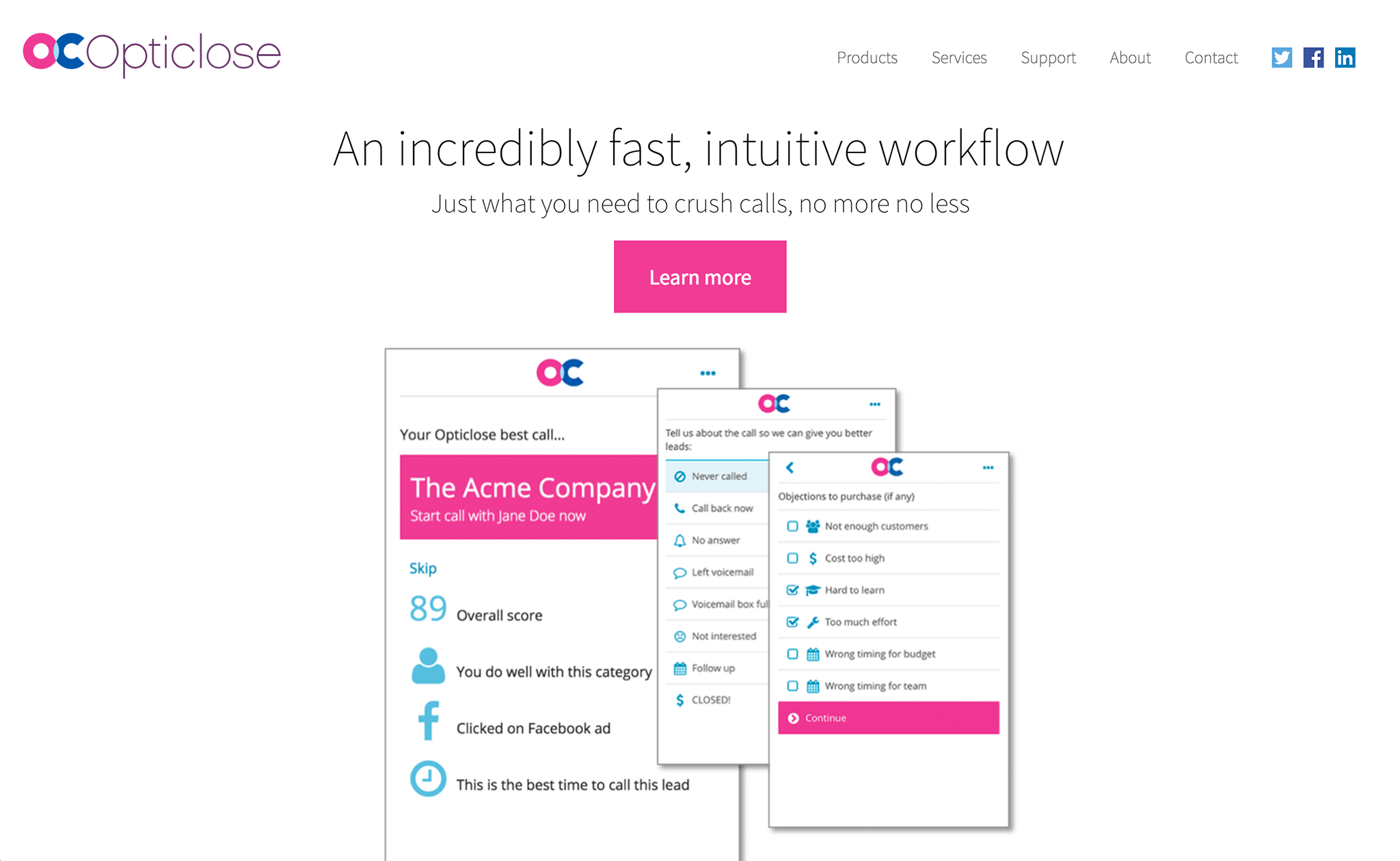
Opticlose was a sales acceleration tool that used regression analysis to predict the best prospect for a salesperson to engage with at the current moment. Initially targeted at telesales, it used a bidirectional sync with Salesforce to harvest realtime data for regressions and then present a streamlined UI for recording call outcomes. This “fed two birds with one scone” by solving the twin problems of not knowing who to call and Salesforce being hard to learn and use all day. I made a punchy brand to stand out in the ubiquitously bland universe of sales enablement tools, since word of mouth and user trials were key marketing channels for us. I was responsible for brand, design, front end coding, and engineering management and roadmap. I also did embedded research with customers and their users, presentations to investors, and coded a working prototype in AngularJS which we transitioned into our live alpha product.


Syndio product design and data visualization

Growing an equitable pay platform

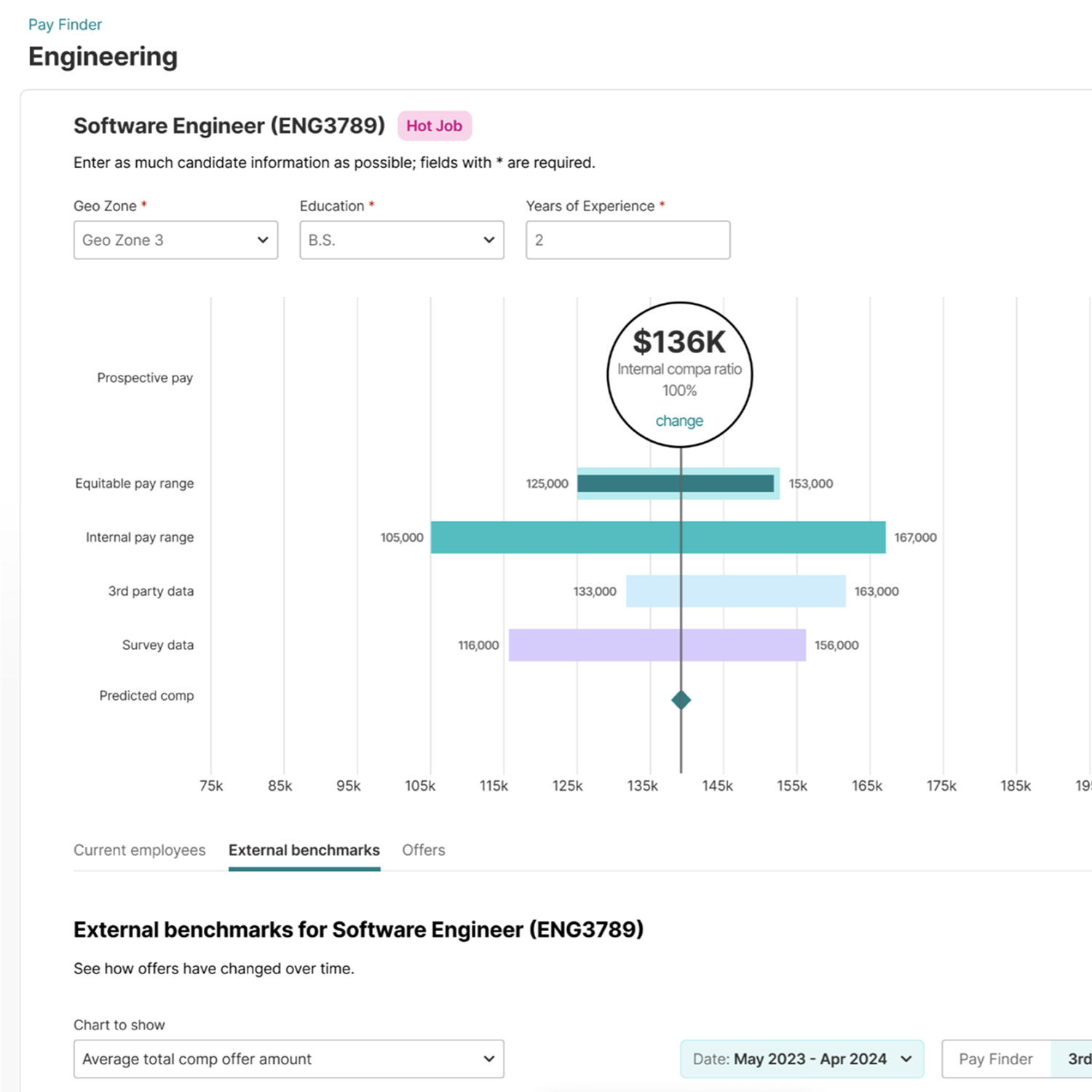
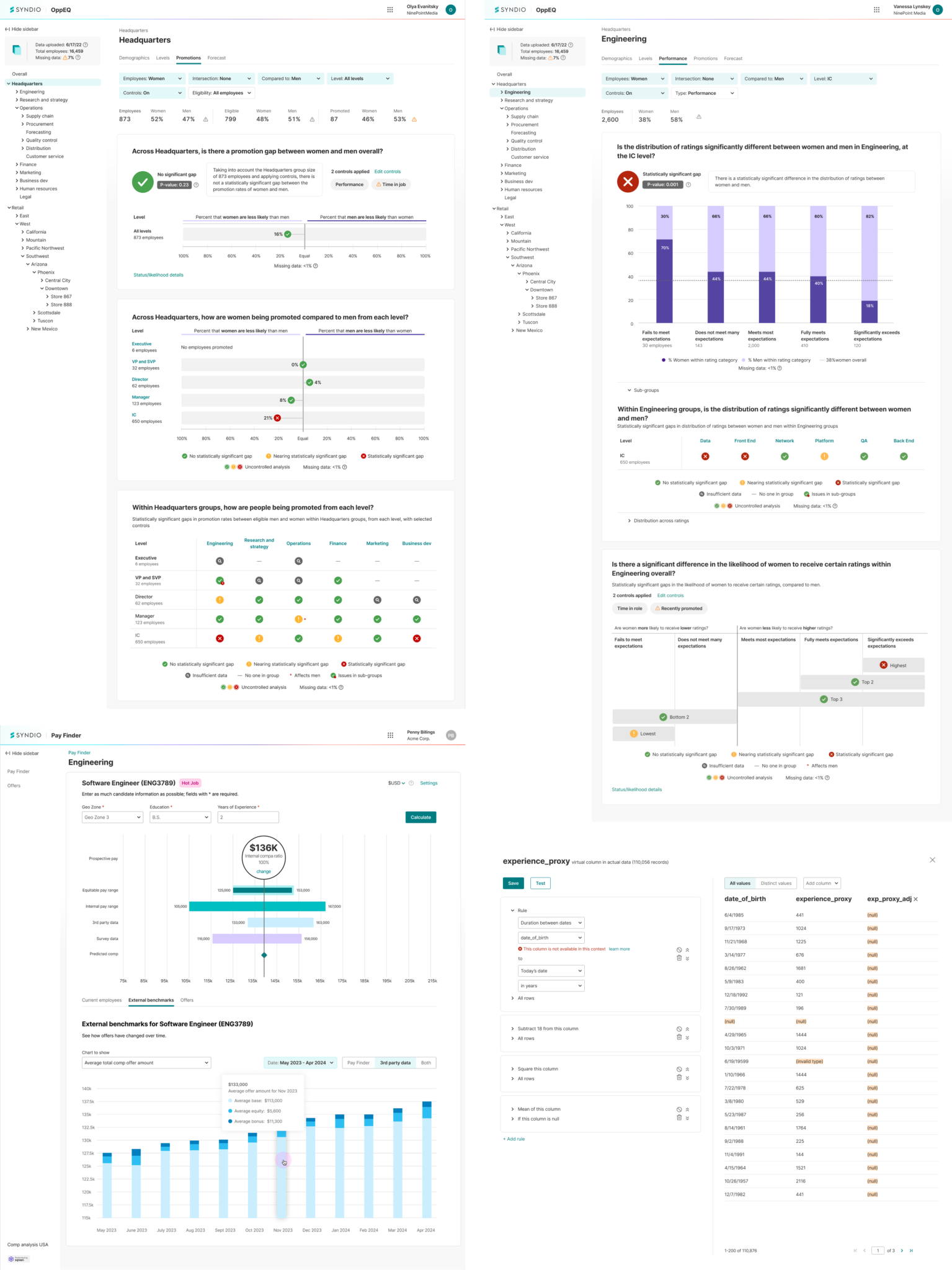
Syndio promotes fairness in the workplace by helping companies analyze and improve on equal pay, pay policy, representation, and career paths for women and underrepresented minorities. Centered on applying regression analysis to labor economics data, the products had complex UIs with profound cultural and legal implications. In addition to hands-on design, as a principal I collaborated across the entire org, advised leadership, led critical initiatives, and mentored designers and product managers. We delivered several new products, a well documented storybook design system, platform strategy, ML strategy, a support chatbot, and an ever growing set of complex, high stakes data visualizations. I also delivered extensive research on data integration, a complex data integration workflow, and a powerful data transformation UX.

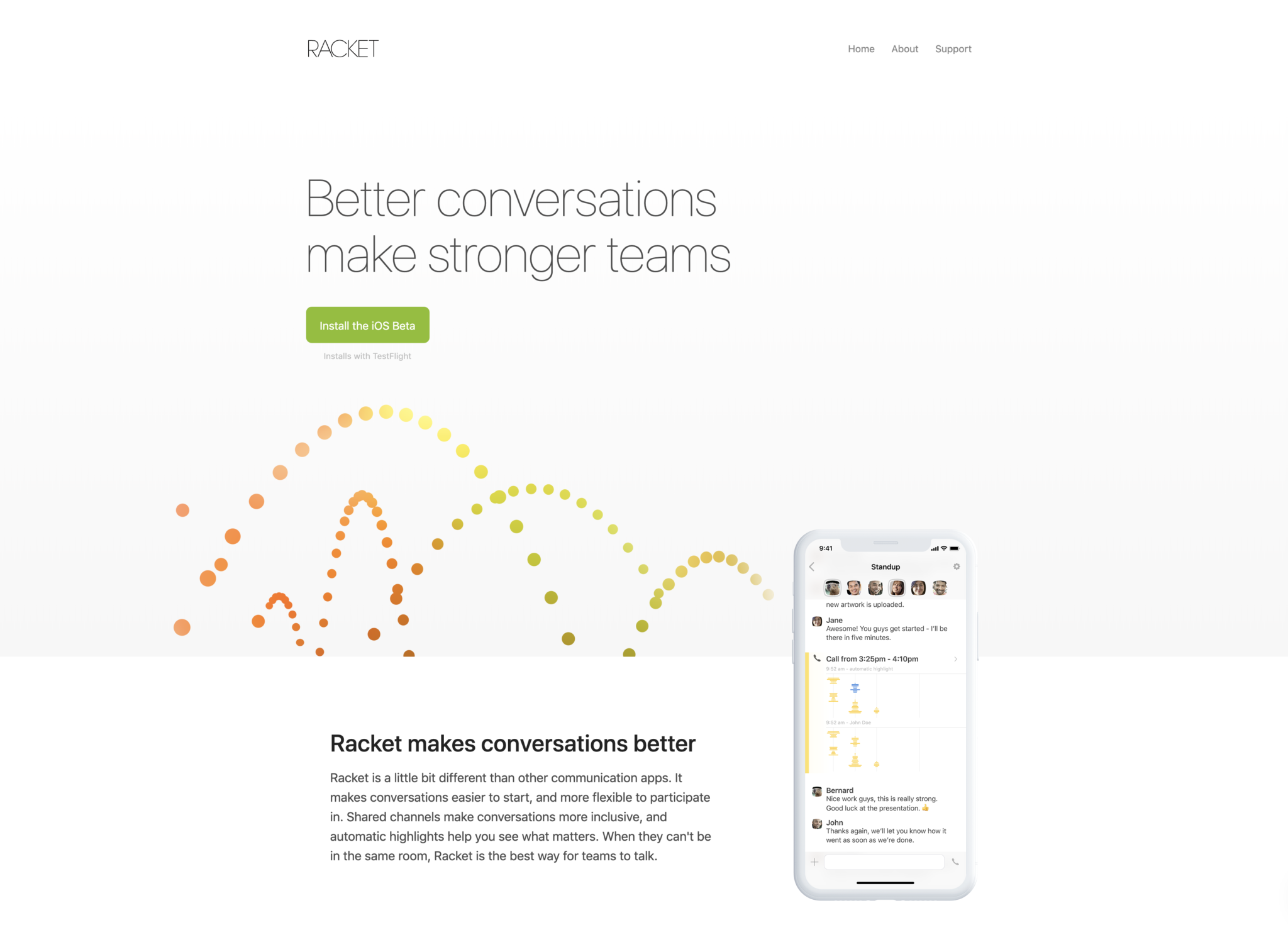
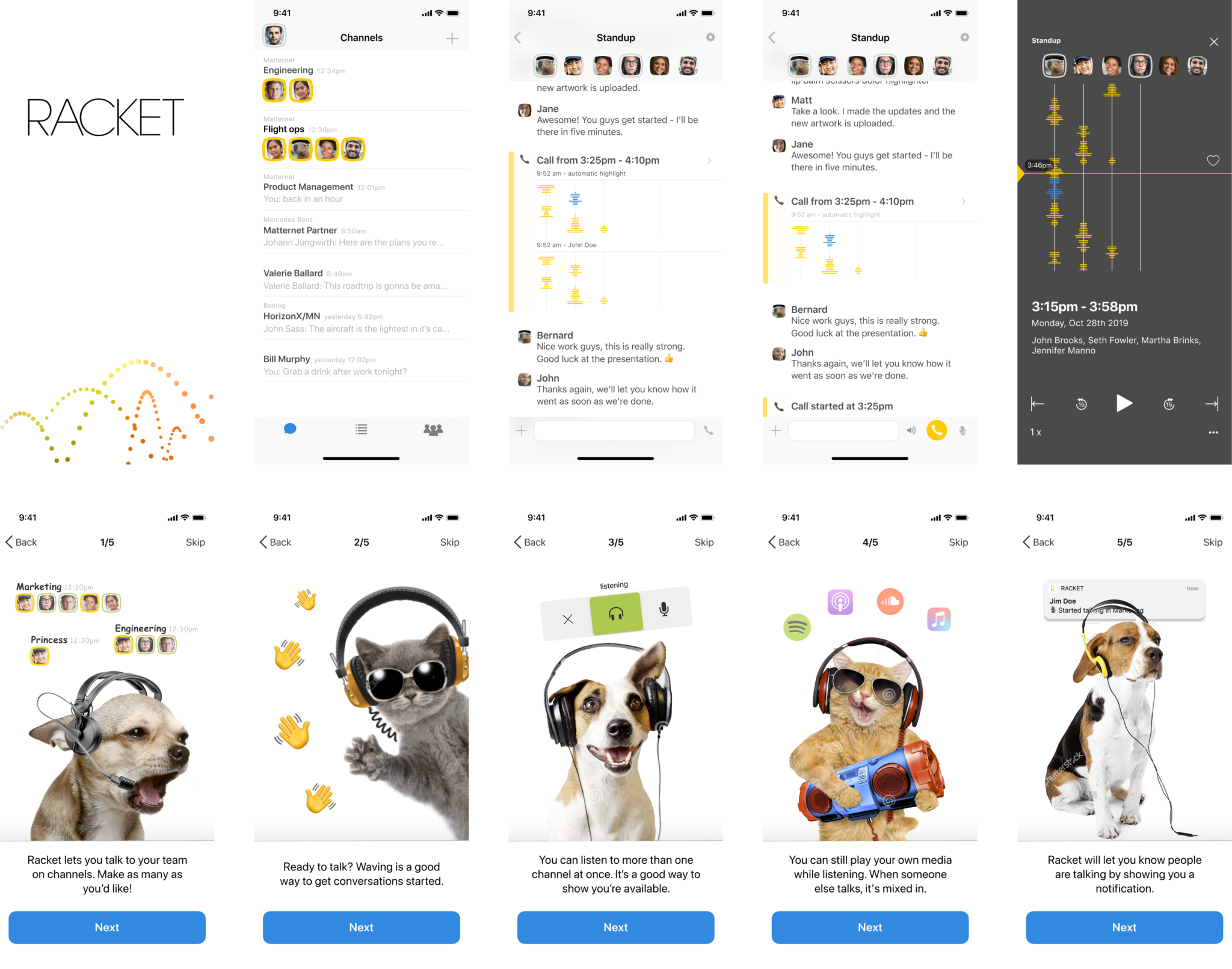
Racket 1.0 iOS app

Every team is a remote team

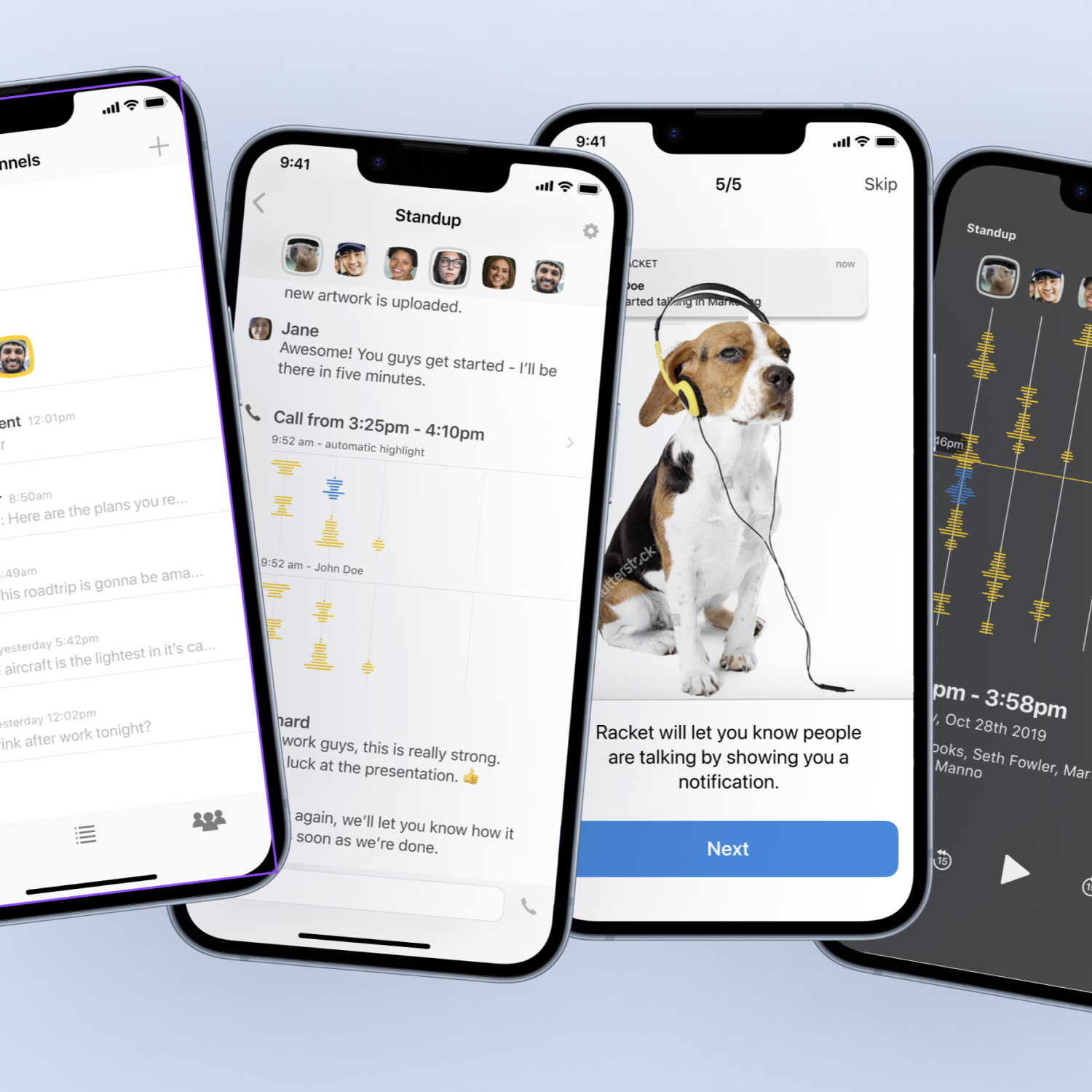
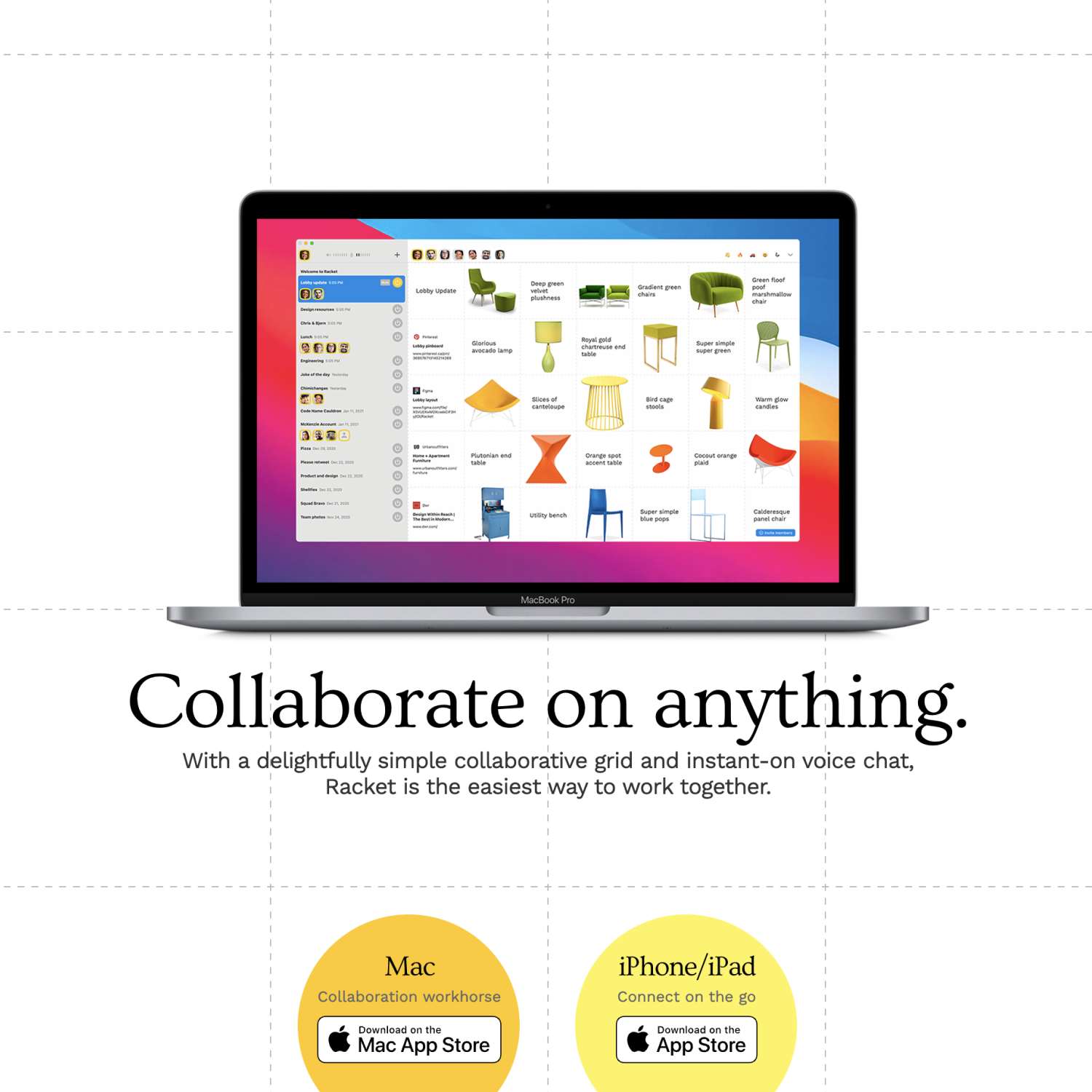
Inspired by the rising popularity of airpods, my partner and I were funded to do a startup called Racket to imagine how hybrid teams could communicate with always-on audio. The idea was to make conversations effortless – with all the spontaneity and serendipity of working in the same space. The solution was to extend the current mode of remote collaboration, messaging, with audio – imagine Slack but if it was multi-modal – long before Slack huddles was launched (and with a better UX). Racket let you listen and talk in text conversations and have synchronous audio conversations in a channel that others could read or listen to later. Seamlessly move between text and voice to fit your context and benefit from the strengths of both asynchronous and synchronous communication. We designed and built out authentication, onboarding, invites, user management, channels, audio playback, audio emoji, and an admin console. Racket was built on WebRTC architecture, and featured multichannel recording for speaker isolation and transcription, smart muting for team members in the same room and a bunch of other novel features. As one of two founders I compiled a massive competitive analysis, designed and specified all the product features, ran QA, and wrote the patent.

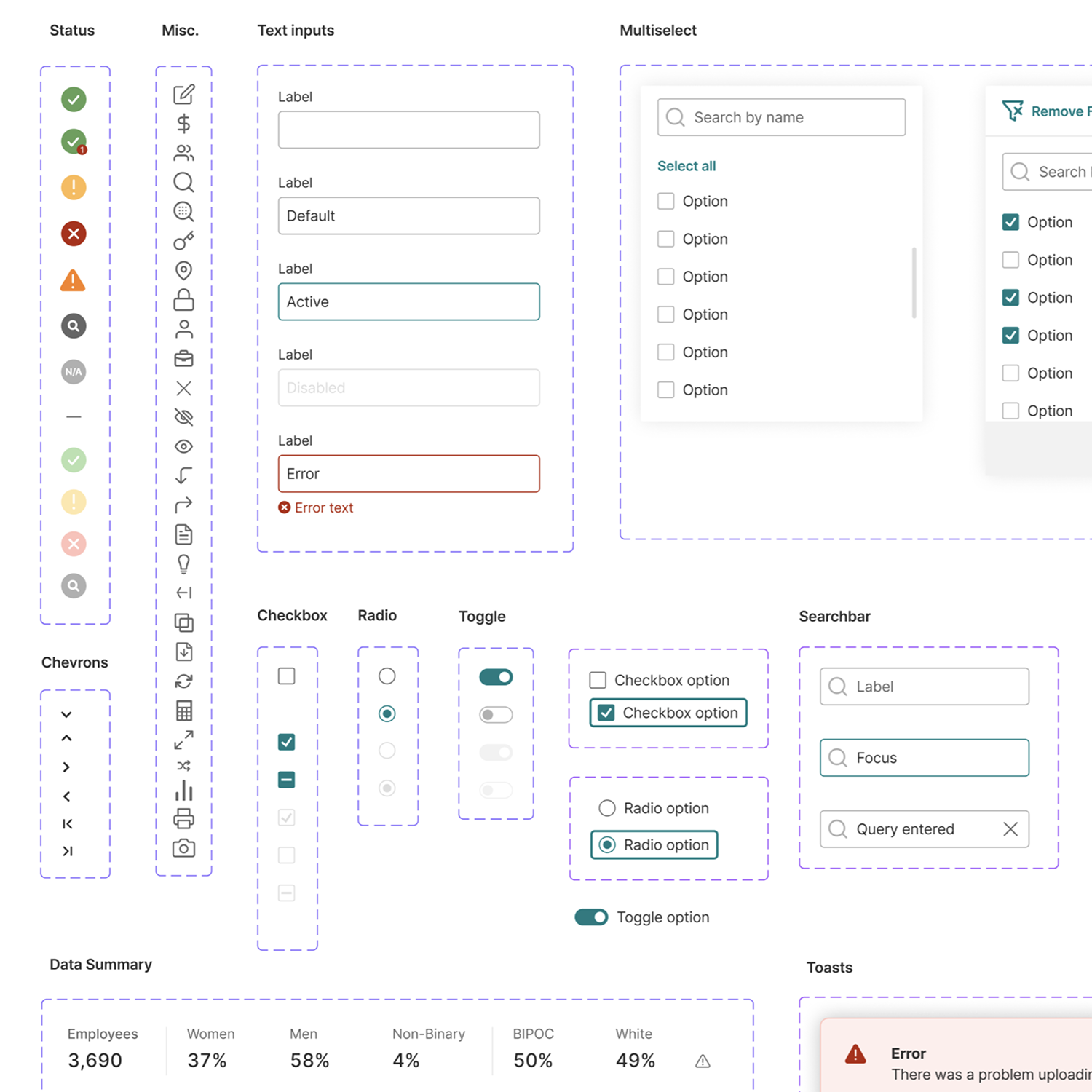
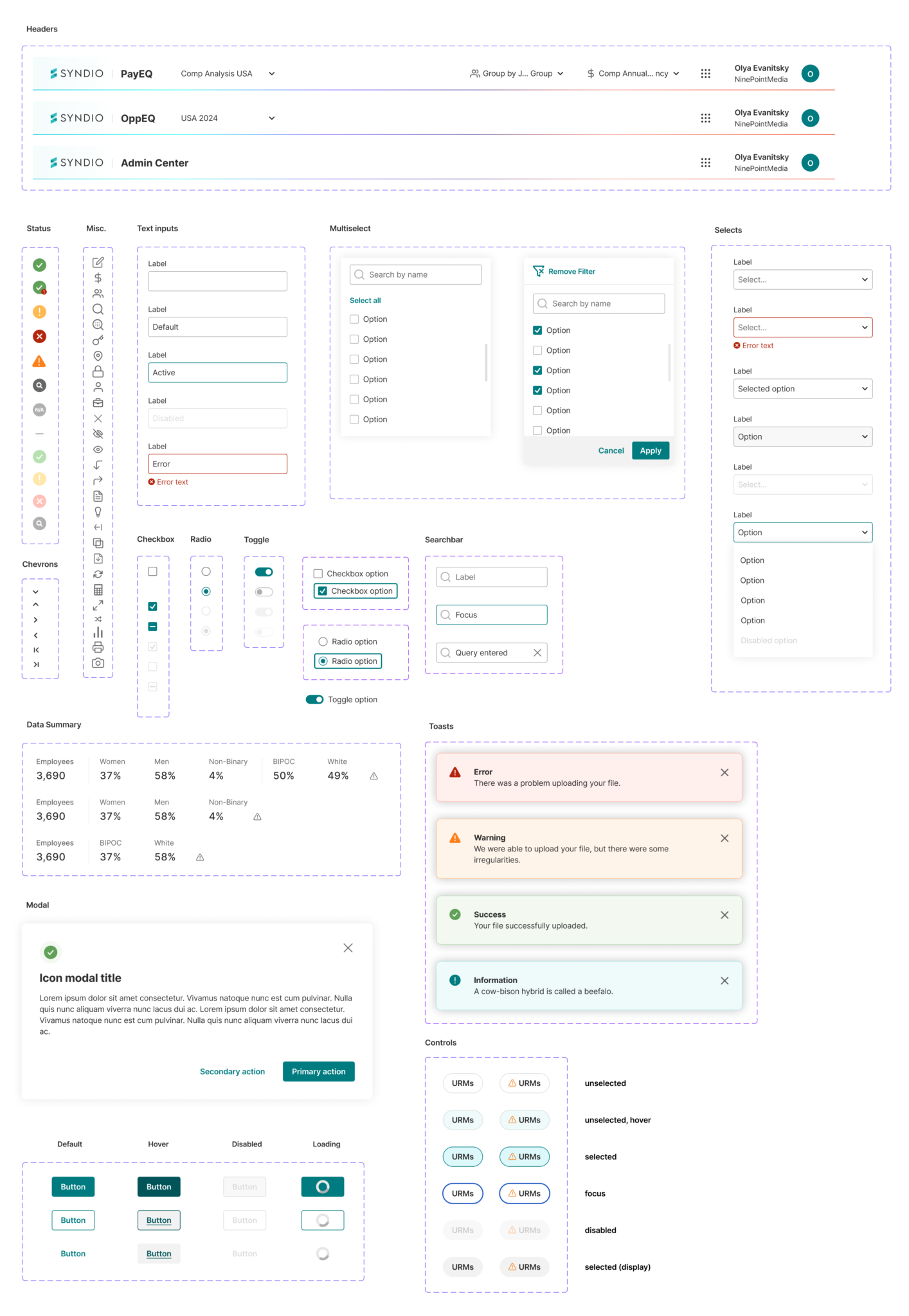
Syndio design system and storybook specification

Invisible design

The Syndio design team created a new design system when we designed the second product in the platform, then gradually retrofitted the existing product to fit the new system as time and focus allowed. Because Syndio’s product UI was primarily data visualization and decision making oriented, we wanted a super minimal presence for our design elements so that content could be the focus. We built out a drag and drop library in Figma including all icons, form elements, color and type specifications, template features, template spacing, etc. We worked across siloed dev teams to build storybook specifications, including custom components to meet specific needs, evaluated frontend frameworks for capabilities, and managed transition to Mantine, Tanstack and others. Accessibility was core to everything. We also extended documentation by writing a library of detailed template specs to provide engineer guidance on composing screens using components to drive consistency and reduce review cycles.

Racket 3.0 iOS/Mac apps and brand identity

Lemon, lime, mango and papaya

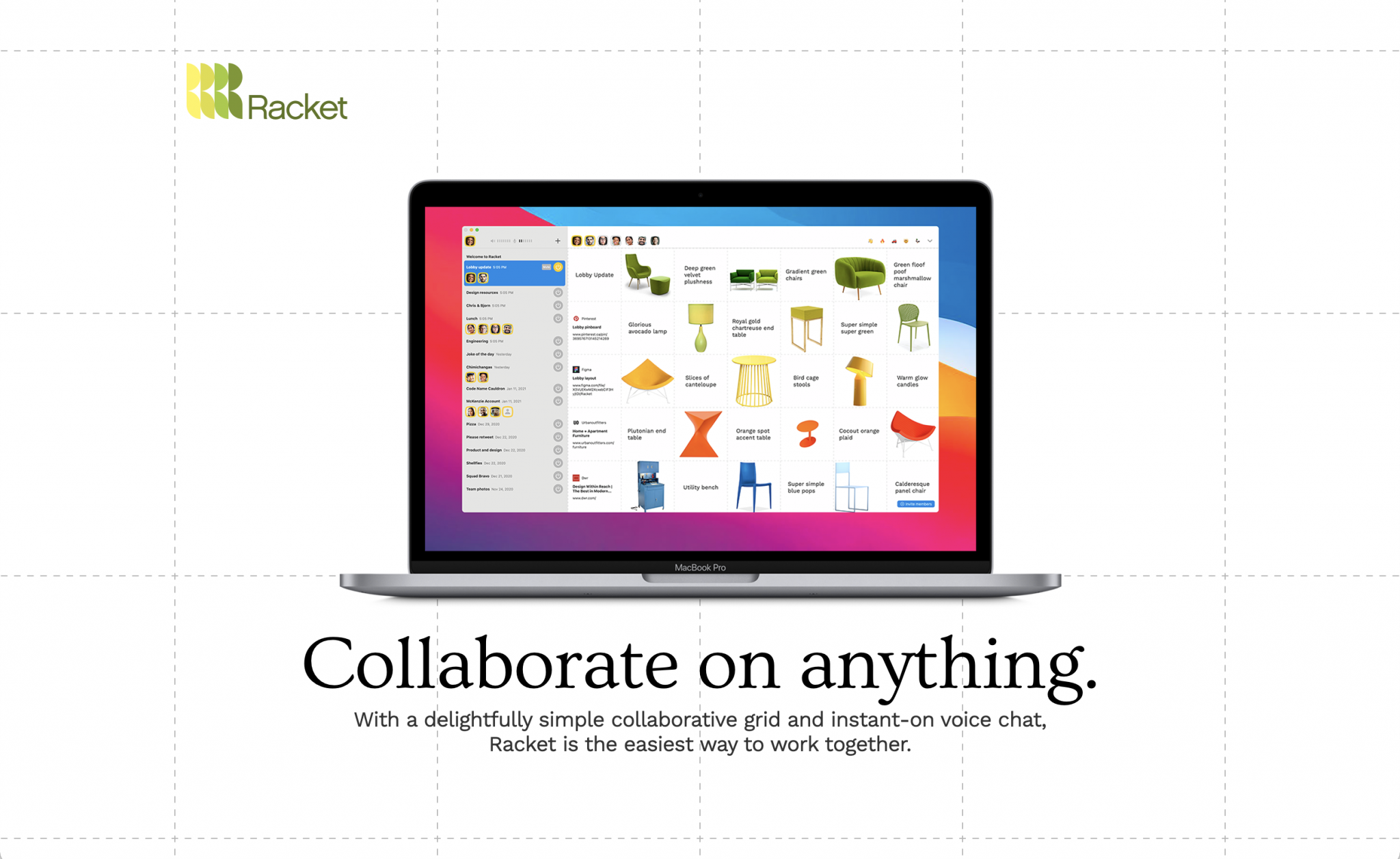
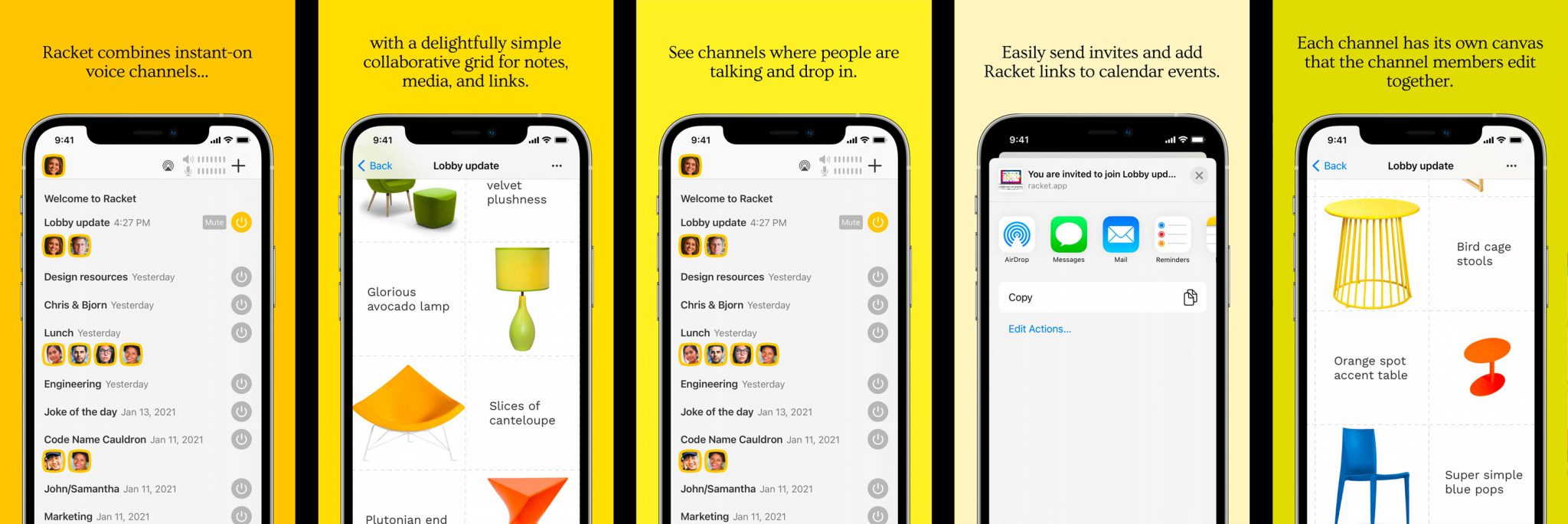
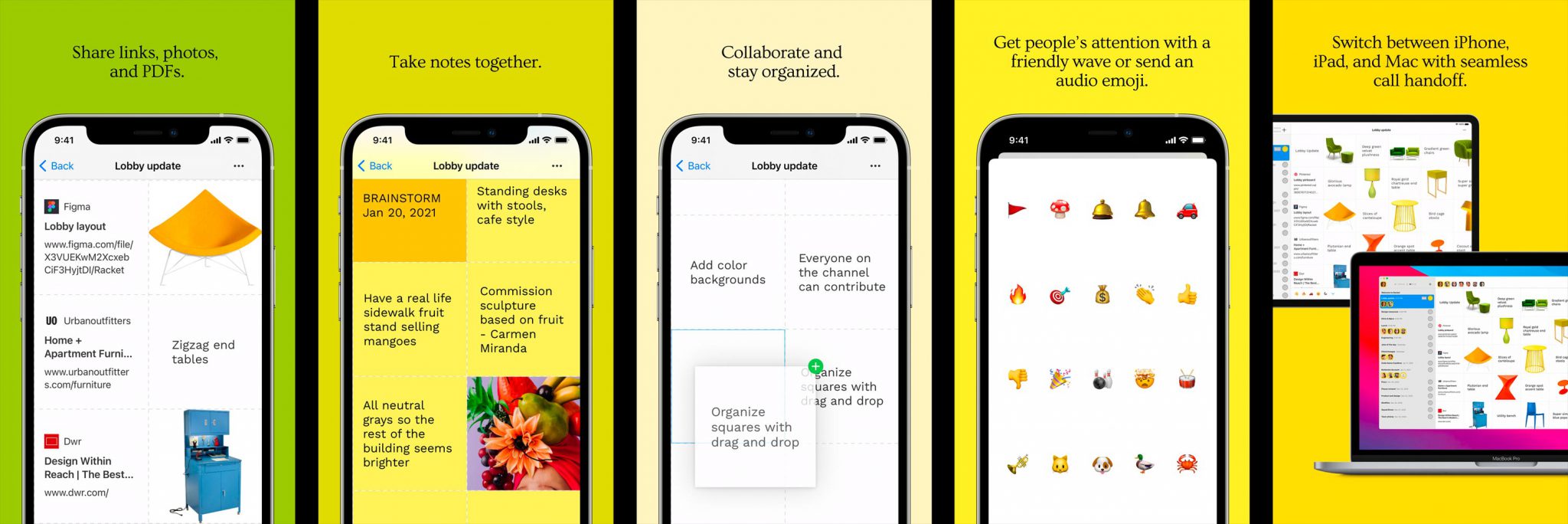
A pivot for Racket toward productivity, 3.0 was a collaborative canvas and audio communication platform on Mac Desktop and iPhone. In addition to updating existing Racket features, we added synchronization and collaborative collision rules for the canvas, and I contributed hands-on UI design directly in Swift for a number of elements. I gave it a brand design that embodies collaboration through the progression of color and repetition of layers, creates a language of bold simple shapes, evokes the product name with a subtle letter R, and incidentally looks like delicious fruit. A fun and inviting brand that could appeal to both business and consumer users, with key deliverables of an app icon, app store presentation, and desktop/mobile website that mimicked the product UI.

Commure integrated medical systems prototype

HMS and EMR drive HCPs to GTFO

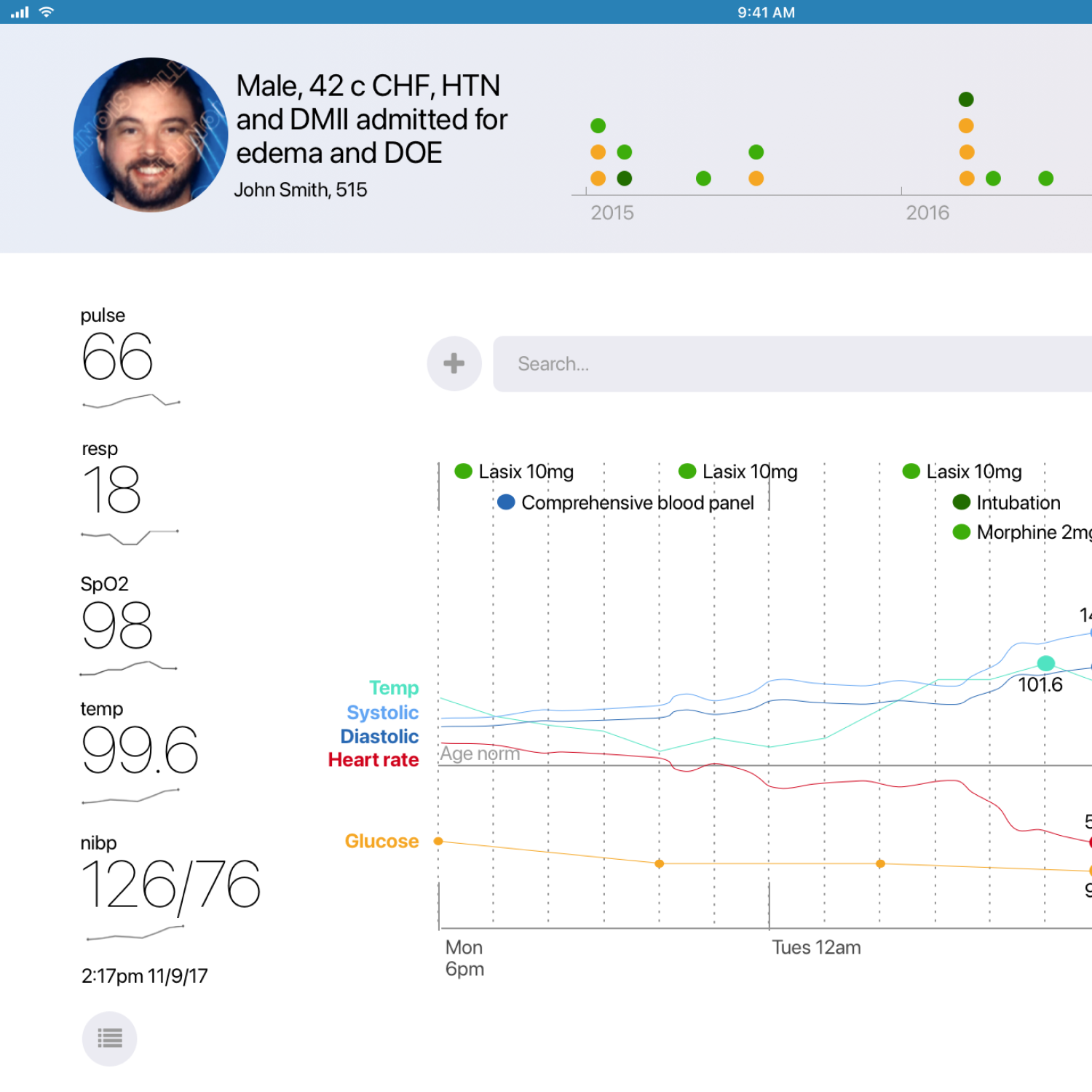
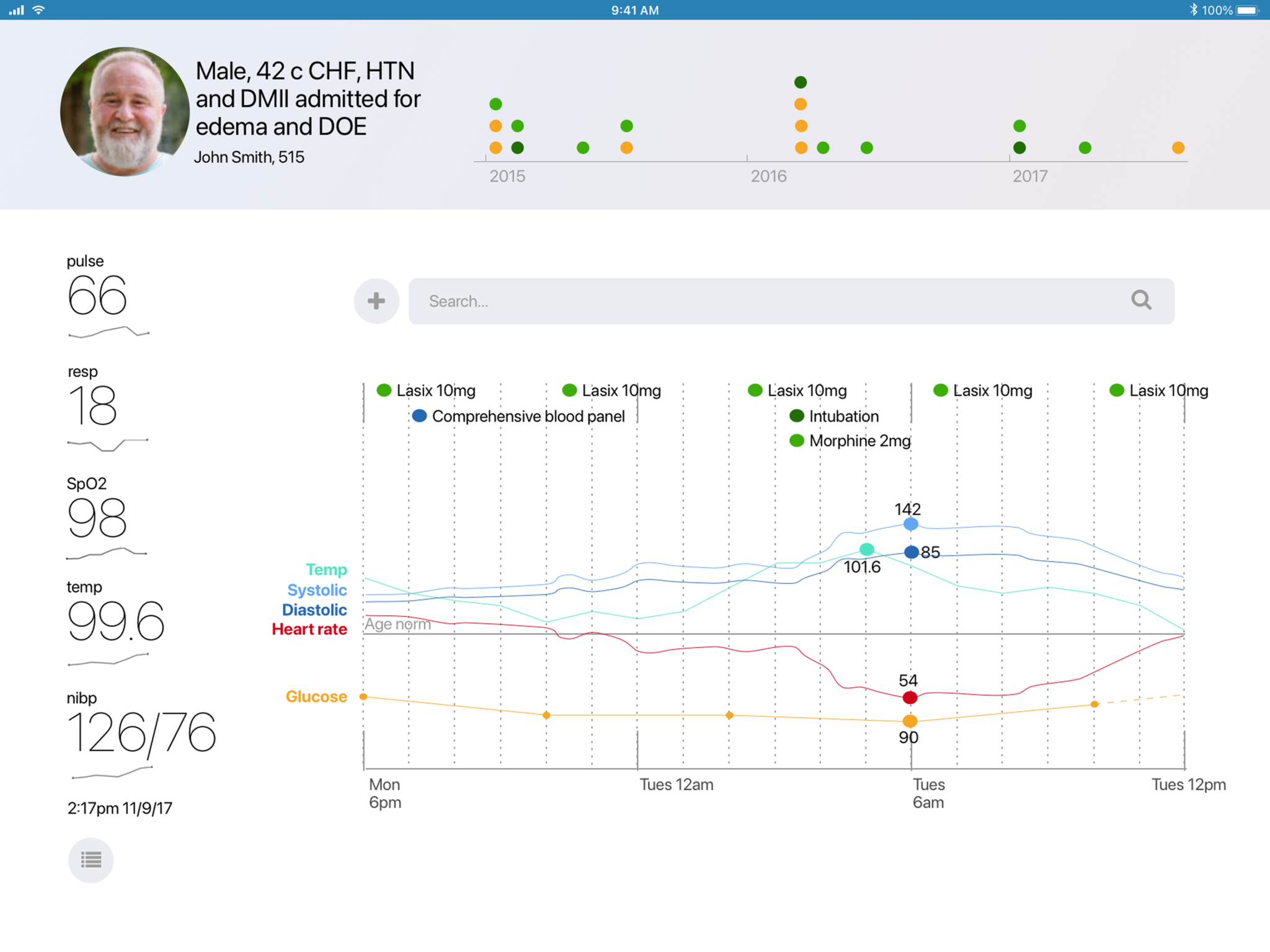
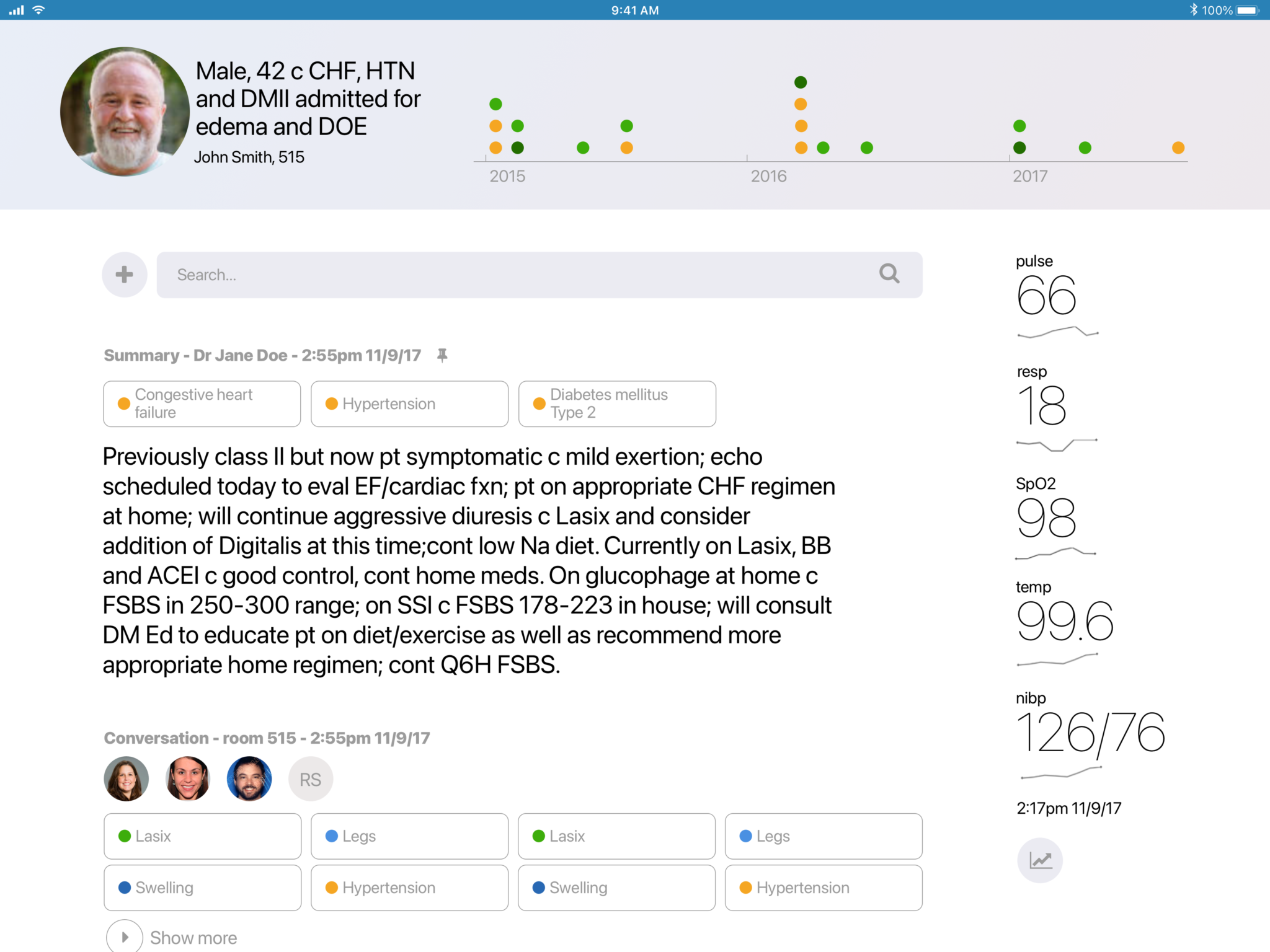
Healthcare professionals (HCPs) face an onslaught of documentation. It’s so bad, it actually causes a significant level of burnout and employee attrition. People spend all day on the computer instead of helping patients, get overloaded, and decide they can’t make it work. The root of the problem: a near total monopoly on Healthcare Management Systems and Electronic Medical Records by just two companies. With zero incentive to improve software usability, these companies have made zero investment in their UX. Commure was a (very well funded) angel stage healthcare startup with ambitions to take on and disrupt the monopoly holders (Epic and Cerner) by making software that actually works for users. My partner and I did a vision project for them covering two key areas – excessively difficult data entry, and fractured data views. We did research with eminent medical professionals and leaders including onsite ethnography at UCSF and delivered a code/design hybrid prototype. It could transcribe doctor/patient conversations and identify medically relevant tokens like conditions, medical orders, and medications and provided an integrated longitudinal visualization of patient status and medical records. We worked with the CEO and presented to the board and key investors. Commure is delivering on the promise of their initial concept – they’re valued somewhere north of $6 billion, closing a $200 million round in 2025.

Bose Channels team communication app

Giving people control of our most important human sense

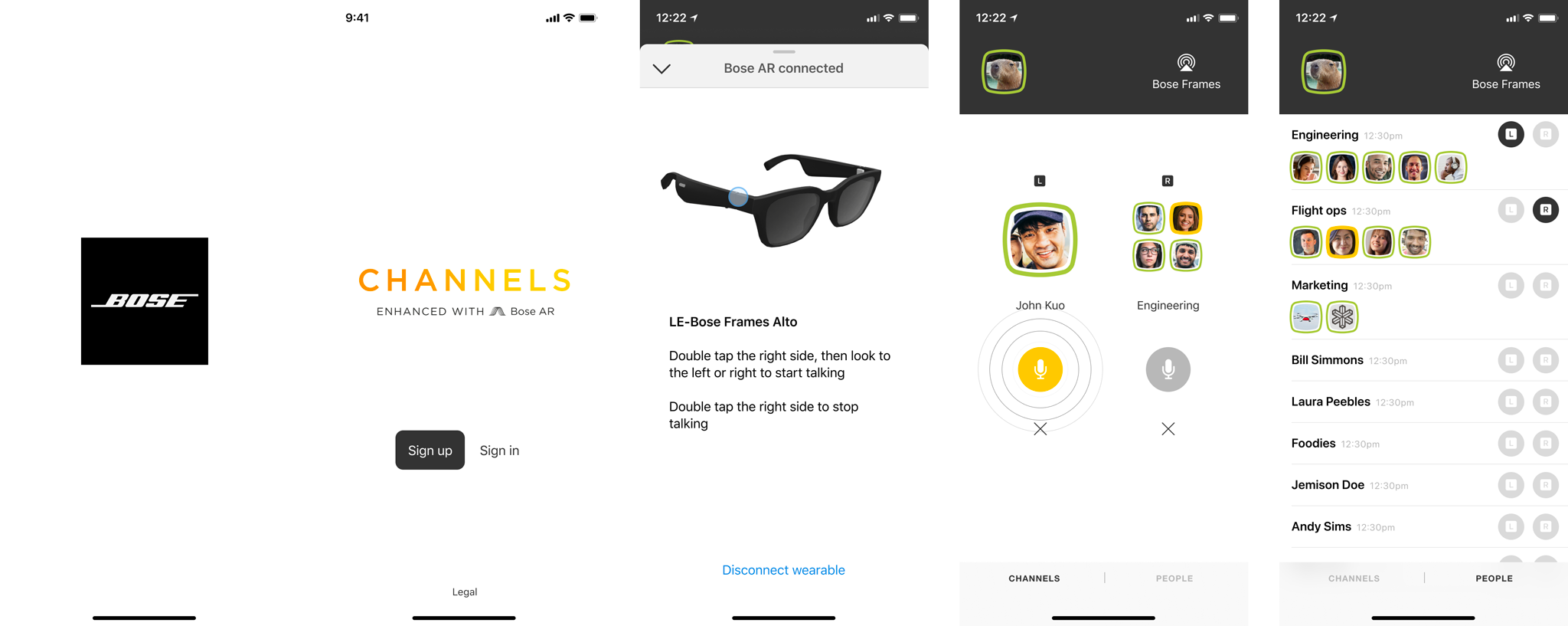
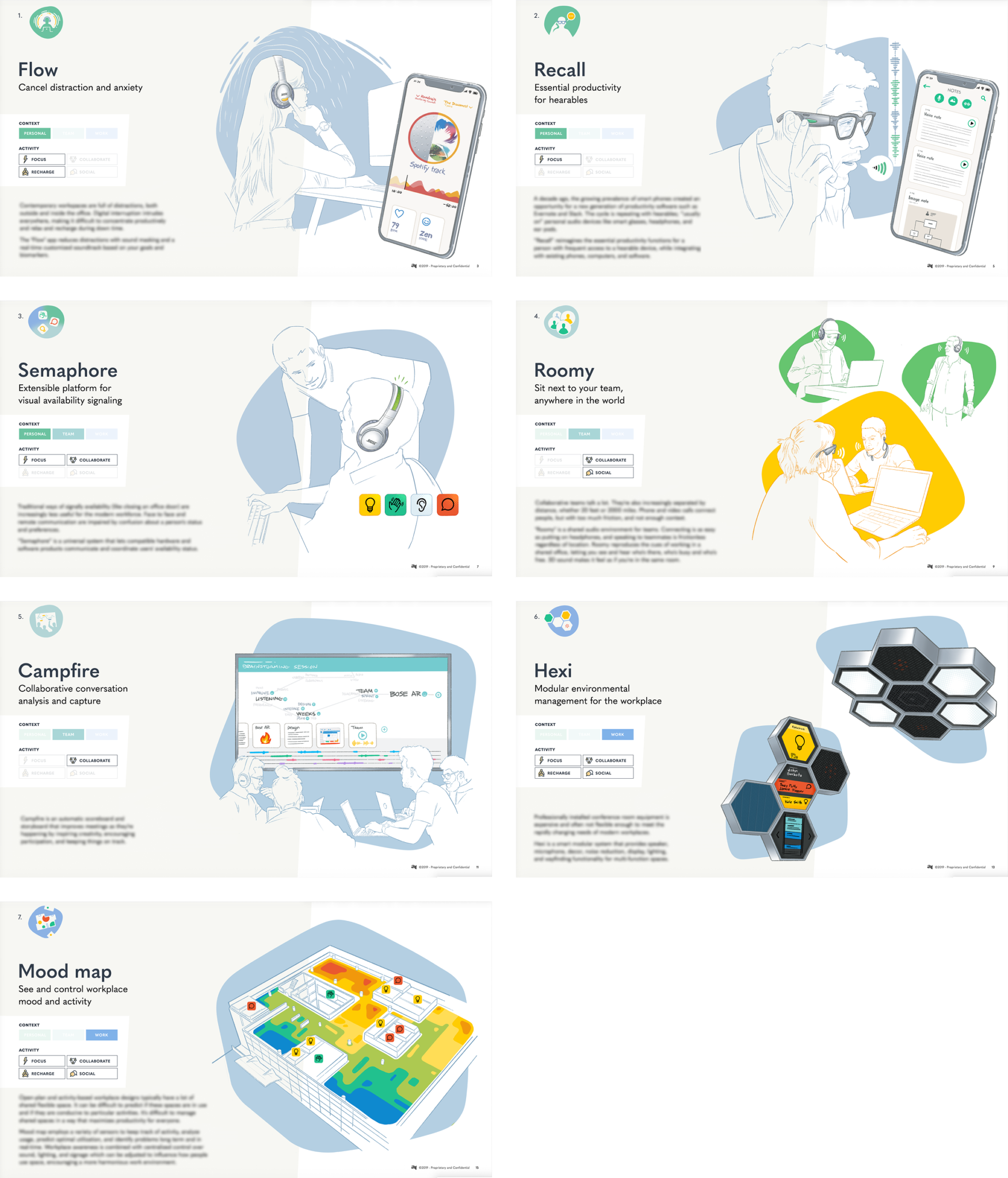
We collaborated with the legendary Dan Gauger, the pioneer of active noise cancelling at Bose in their innovation group to explore new product ideas. We fleshed out 7 hardware/software product concepts from noise cancelling rooms, to headphone traffic lights, to audio-neural stimulation. My partner and I built out a working prototype of one concept that integrated the touch controls in their headphones and glasses hardware to make team communication a double tap away (a single tap sounds better, but it’s actually too close).